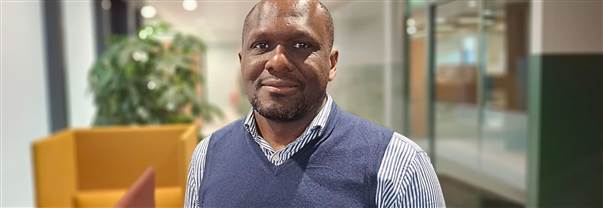
Olaf, branché data
A passionate mathematician, Olaf puts his talent to work toward a clear objective: preserving resources
Meet Olaf
Disciplines: Sociology, Behavioural Sciences, Customer Relations and Decision Support
Mission: Julia aims to understand water-related behaviors, inform local authority decision-making and to support the development of water services as they navigate the social, environmental and economic challenges they face.

When Julia talks about her job, she focuses on people above all else: customers who are struggling to pay their water bills; people adapting their habits in the face of drought; and consumers who prefer bottled water to tap water. Beyond the data, statistics and consumption trends, her main goal is to understand behaviour.
Having worked at SUEZ for over ten years, this trained sociologist applies the social sciences to practical issues. Her expertise has become invaluable in understanding users' expectations, supporting the transformation of water services, and devising solutions tailored to local circumstances.
This focus on individuals has become the common thread running through her career. For Julia, “social and environmental challenges cannot be resolved without understanding the people experiencing them”.
An understanding of those affected by social and environmental challenges is essential to resolving them.Julia
Initially, however, Julia had not set her sights on sociology. After completing her science A-levels, her daily life was largely dominated by a demanding passion: competitive horse riding. Without envisaging a career in it, she went on to study for a BTS in Communication in Toulouse. It was there, almost by chance, that she discovered sociology. It was love at first sight. She was fascinated by this discipline, which examines behaviour, social standards, and life trajectories. "I loved asking myself questions like: who are we, why do we do the things we do, how is our behaviour influenced by society, and how can we influence our own life paths and choices?"
The next steps followed naturally: a Master's degree in Applied Sociology, followed by a PhD in Environmental Sociology under a joint supervision arrangement between France and Quebec. Her thesis focuses on the use of pesticides by amateur gardeners. This may seem a very specific subject, but it opens up much broader issues: public health, the environment, regulation, and even changes in behaviour.
she summarises.'This seemingly trivial subject actually allowed me to address a multifaceted issue in a small way and contribute to practical public policy aimed at reducing exposure risks for amateur gardeners,'
It is an approach that she has never strayed from: starting in the field, understanding practices, and transforming these analyses into actionable knowledge.
Julia joined LyRE, SUEZ’s research centre in Bordeaux, in 2013. At the time, the Group still lacked a sociology presence. In an environment largely structured around engineering sciences, her background stood out. 'In an engineering firm, I had a very unusual background!'
She then had to find her place, understand the business lines, put people at ease, and demonstrate the value of this approach. 'Sociology provides concrete answers to real-world problems.'
The real challenge lay in demonstrating how the social sciences could shed light on practical issues, such as improving customer understanding, their relationship with the water service, the barriers to changing usage patterns and the ways in which change could be supported.
Thirteen years on, the venture has been a success. What was initially just an emerging field of expertise has become the ‘Actors & Uses’
division, which Julia now leads. This is a multidisciplinary team that brings together sociologists, economists, data scientists and a project manager in order to support the various business units in their decision-making and transformations.
Julia emphasises one point in particular: the projects led by the division are driven forward by a passionate and deeply committed team above all else. “I’m their conductor, but they drive these initiatives forward on a day-to-day basis,”
she says. She holds this conviction with pride, as each person’s complementary expertise enriches the projects and enhances their impact.
Julia’s work often begins with data and goes beyond it. For example, a consumption trend may reveal a demographic shift, a change in usage, or the effects of a drought. Unpaid bills, on the other hand, can mask very different realities, such as water insecurity, a lack of awareness of available support or the occasional oversight. In other words, the figures provide clues, but rarely tell the whole story.
To gain a full understanding, Julia and her team cross-reference data, draw on scientific research, and meet with relevant stakeholders, including inhabitants, local authorities, businesses, social organisations, and field staff.“We’re a bit like Sherlock Holmes,”
she smiles.
This approach now informs numerous projects relating to customer relations and understanding customers, as well as changes in water usage patterns.
Julia and her team have developed recognised expertise on topics as varied as water insecurity and access to water, water conservation, water service pricing and the acceptability of new water-related solutions.
Julia's role is to help local authorities better understand the realities of their areas so they can develop responses tailored to the needs of their inhabitants in an ever-changing world where water-related challenges are significant.
The topics covered are varied. Some focus on identifying situations of vulnerability linked to access to water, while others support initiatives to promote water efficiency. Others examine consumer behaviour, the impact of tariff changes or how to anticipate the effects of falling consumption on water services. The approach remains the same in all cases: understand before acting.
After applying her expertise in France for more than ten years, Julia is now embarking on a new chapter on the international stage. In Dakar, Senegal, she is supporting a SEN’EAU project focused on managing water consumption. The challenge lies in gaining a better understanding of usage patterns, perceptions, and drivers of change within a different socio-cultural context while sharing these approaches with local teams.
This move also marks a broader evolution in her work. As well as issues related to consumption, she is focusing more and more on customer relations, customer insight, and the performance of customer service teams internationally. It is a new area of exploration that she finds particularly stimulating. "It's like a whole new field is opening up. It can be a bit dizzying, but it's exciting!"
If we had to summarise what motivates Julia today, it would undoubtedly be this belief: technical solutions alone cannot address the significant challenges facing the water industry. To be effective, these solutions must be understood, accepted and embraced by the people they are intended for. 'A solution may look good on paper, but if the people involved don't understand, trust or see the point of it, it will remain underused.'
Combining technical data with human realities, research with operations and experts with users has been Julia's driving force since she started out. This is undoubtedly why this sociologist has found her place in a world of engineers. Understanding behaviour is not a peripheral issue. It is often what enables a good idea to be transformed into a genuinely useful and sustainable solution.
.jpg?h=208&w=603&v=1&d=20260703T125410Z&format=jpg&crop=0&hash=34B879C77FC5D04FA4E1021B836EB7CE "MIN_2000x1125px (1)")
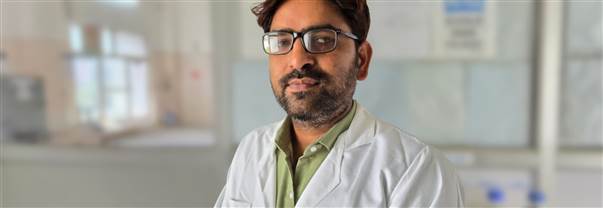
For Min, research is not abstract. It is fuelled by her personal history, her sensitivity to nature, and her strong conviction that understanding pollution is crucial to preserving water, the environment, and public health.
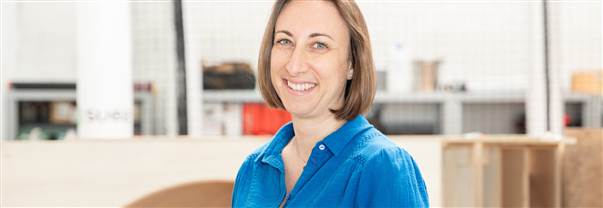
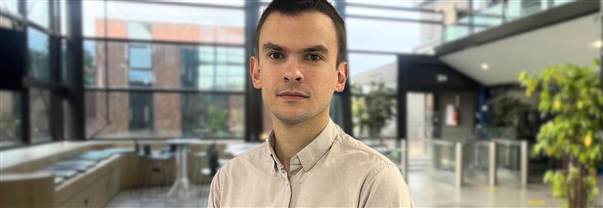
As a specialist in health risk assessment at CIRSEE, SUEZ’s international research centre, Jérôme has a job that few people would guess
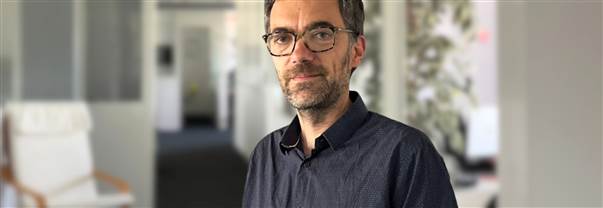
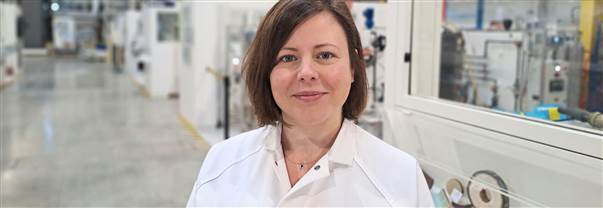
Directeur d’activité en océanographie chez SUEZ, Marc utilise la modélisation numérique pour anticiper les mouvements de l’océan et réduire l’impact environnemental sur les écosystèmes marins.