Discover


-14 %
Reduction in residual household waste produced over six years
Over the last 10 years, together with the CNRS, one of the world’s leading research organisations, we have collaborated on more than 30 projects and hold a portfolio of 14 joint patents.
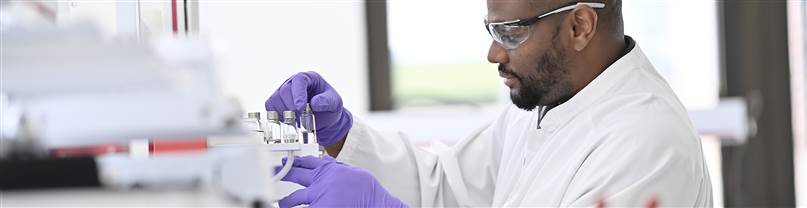
Our teams and researchers from the ICMCB(1), the CNRS laboratory specialising in supercritical fluids, have notably co-developed a pilot hydrothermal gasification unit.
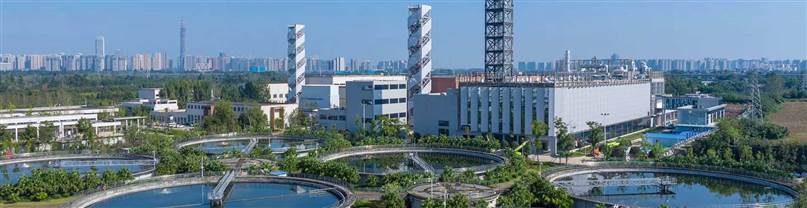
This innovative process makes it possible to treat liquid or wet organic waste by recovering the resources they contain, producing renewable gas while destroying pollutants.
The new framework agreement signed in 2025 reinforces the pooling of our innovation capabilities and the CNRS’s scientific excellence over the next five years.
(1) Bordeaux Institute of Condensed Matter Chemistry.
14
joint patents
filed over 10 years by SUEZ and the CNRS


In 2020, the collaboration took on a new dimension with the creation of SEN’EAU, a company incorporated under Senegalese law that we established with the State of Senegal.
It provides access to water for 10 million people with tangible benefits. Across the entire area managed by SEN’EAU, water is supplied 24 hours a day in urban and peri-urban areas, with a quality that meets WHO standards. In particular, 98% of Dakar’s residents have a continuous water supply. Network modelling has enabled all residents of Dakar to benefit from a new water supply of 200,000 m3 per day mobilised by the State.
Today, 93% of consumers place their trust in SEN’EAU. In 2025, the United Nations Economic Commission awarded its first prize to SEN’EAU as a successful example of a Public-Private Partnership. The involvement of the State of Senegal and our expertise in the water sector within SEN’EAU have contributed to this success.
98 %
of Dakar’s residents benefit from a continuous water supply

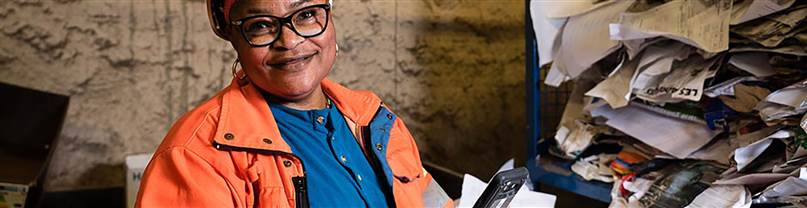
At SUEZ, we firmly believe that waste is not simply rubbish but a resource. We support our corporate and industrial clients across a wide range of sectors – retail, healthcare, printing, the automative sector, energy and heavy industry – in the comprehensive management of their waste. Drawing on our culture of innovation and our partnership-based approach, we work with each client to develop bespoke solutions tailored to their operational constraints and challenges. Our ambition is clear: to ensure that every type of waste finds it way to recovery, whether as material (cardboard, packaging, copper, steel, aluminium, wood, etc.) or energy (heat, electricity, etc.), to accelerate our clients’ environmental transition.Martin Bignot, Director of Waste Stream Strategy and Business Intelligence, Recycling & Recovery activities in France, SUEZ