Découvrir

In Nice (France), Haliotis 2 will be much more than a wastewater treatment plant: a technological and sustainable hub. The site will produce renewable energy, treat microplastics and reuse 5 million m3 of wastewater per year for urban irrigation and cleaning.
By 2030, it will generate four times more energy than it currently consumes and will avoid 15,000 tonnes of CO2 equivalent each year through the recovery of biomethane, dried sludge and treated water.
5
million m3
In Marseille (France), through our wastewater subsidiary SERAMM, we have launched France’s first wastewater service to simultaneously manage onshore infrastructure and its impact on the marine environment.
The PH@RE control centre optimises rainwater and wastewater management in real time using interconnected technologies, enabling a dynamic and predictive approach.
> 5,000
sensors


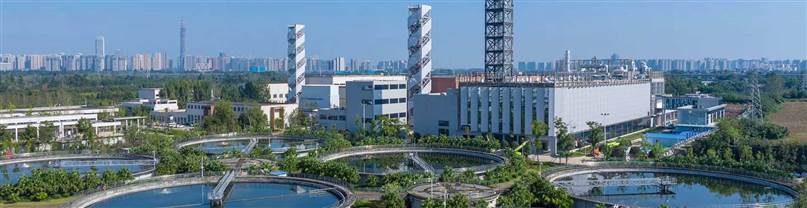
The Yuelai plant exemplifies the transformation of traditional infrastructure into a cuttingedge water treatment facility. Operational excellence is ensured through intelligent management systems deployed throughout every phase of the process. Tertiary treatments using ozone and activated carbon yield water quality exceeding national standards. Alongside energy optimisation measures, the plant employs sustainable construction materials and equipment, complemented by a photovoltaic energy generation system that enhances environmental performance. Covering water intake, production, pumping stations, and distribution networks, the new plant has a daily capacity of 400,000 m3.
This expansion increases our water supply capacity in Chongqing to 1.6 million m3 per day, providing services to over 3.3 million users, and has thus become the largest and most modern water treatment plant in the megacity.
1.6
million m3

In 2022, after discovering the presence of pfas molecules in the water, we tackled the issue with the experts of SUEZ. A series of analyses was carried out, along with tests at the international research centre of SUEZ, CIRSEE, and an industrial pilot project. This enabled us to identify the most effective technology, which we were able to integrate directly into our existing plant: continuous renewal of the activated carbon using a system of downflow reactors. This now allows us to supply quality water that complies with regulations.René Martinez, Vice-President of the Rhône-Sud Joint Drinking Water Syndicate (France) from 2020 to 2026