- Logistics solutions in many countries
- Customised recycling solutions for your business
- The Best Rate Guarantee
Our metal recycling offers to improve your performance
Does your activity generate metal waste? Turn them into value!
We offer a full range of services to optimise your operational, environmental and economic performance. Together, let's make recycling a strategic lever for your business.
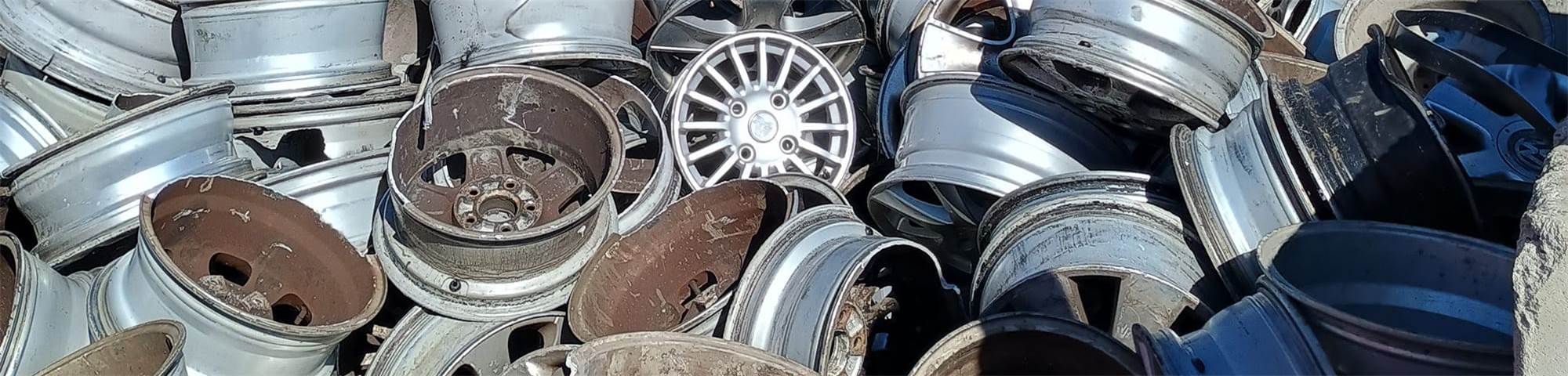
For 125 years, we have been safely collecting, sorting and recycling our customers' ferrous and non-ferrous metals in France and abroad, in complete safety, in their factories, construction sites, household and industrial sorting centres, as well as those brought to our own local sites.
We manage their transfer to processing industries such as steel mills, foundries and refineries in order to create circular economy loops on scrap metal, aluminium, stainless steel, lead, copper waste, etc.
We also have metal preparation lines and sorting processes to improve the quality of the metals collected.


Manufacturers generating large quantities of metals: our tailor-made solutions
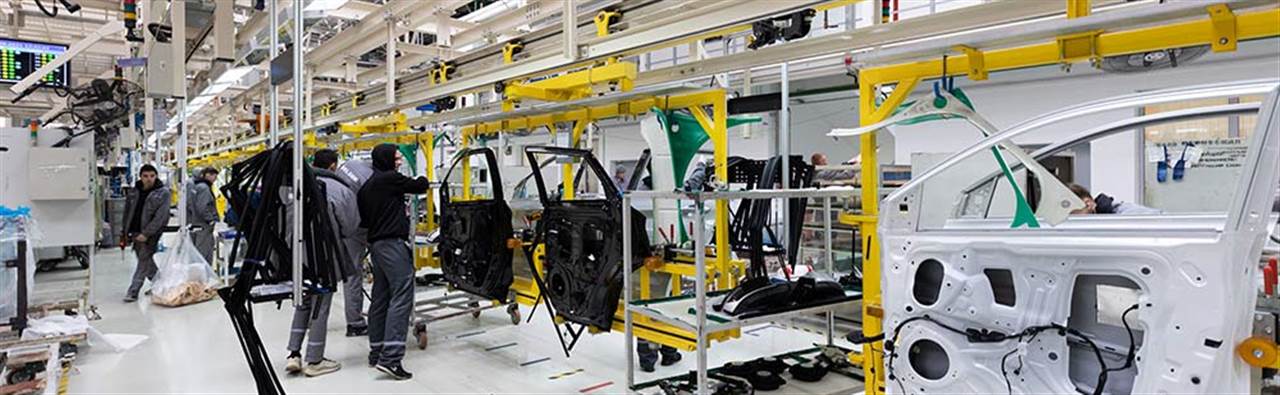
Whether you are a car or other means of transport manufacturer, an OEM, a large series industry, we design and operate the tailor-made solution for your needs. We offer tailor-made services ranging from collection to on-site service.
Since its creation in 1899, Metalimpex has been supporting you in meeting your metal waste management challenges.
For 125 years, we have been recovering all types of metal by acting on the entire value chain, from stamping to recycling in order to limit the impact of logistical, operational and environmental costs. We offer tailor-made services ranging from the simple collection of metal waste to an on-site service.
To make the recycling of your waste a fluid step in your production chain, we put all the resources, teams and tools adapted to maximum efficiency:
- Operational: Our operational teams are at your disposal to deploy the resources and means to be put in place in order to offer you a tailor-made service.
- Logistics: Thanks to our fleet of large industrial tools, we are able to adapt to each flow (road, river, rail, sea)
- Commercial: Our experts monitor the fluctuations in metal prices in order to recover your metal waste at the best prices on the market.
- Technical: We design personalised studies for optimal flow management in partnership with our subsidiaries.
- Administrative and financial: we support you in carrying out your administrative procedures and process all your procedures
- Specialized resources: to provide you with global management, we carry out demolition, torching and flame-cutting operations with our specialized partners.
Whether ferrous or non-ferrous, the metal waste we process is transformed into first-class products, quality that meets international standards.
Businesses: our local solutions for your metal waste
Turn your waste into a resource!
Our local solutions for the collection, sorting and recycling of your metal waste guarantee the best rate and regulatory compliance.
We are here, as close as possible to your needs.
They trust us
Toyota Tsusho and SUEZ: a benchmark international partnership
For many years, the Toyota Tsusho Group and our subsidiary, Boone Comenor Metalimpex (BCM), have developed a successful partnership in Europe, Brazil, India and Turkey.
Thanks to this partnership, the Toyota Tsusho Group has tailor-made solutions adapted to each of its sites, enabling it to respond better and better to the challenges of decarbonization, preservation of the environment and resources and their recovery, and finally the circular economy. In this context, we are developing essential, efficient and differentiating digital solutions with Toyota Tsusho.
Frequently asked questions
It is often said that, throughout their life, metals are infinitely recyclable.
Indeed, once sorted by category (iron, aluminium, copper, etc.), the metals can be melted down again to integrate a new production cycle.
The 2 main benefits of metal recycling are:
- Saving natural resources. Metals are derived from the processing of natural ores. With the scarcity of natural resources, it is essential to develop and promote the recycling of metals.
- Energy savings. Generally speaking, the processing of recycled metals consumes less energy than the manufacture of metals from its ore. These energy savings have a direct impact on the savings of greenhouse gas emissions, in particular on CO2.
All metals are recyclable. They have properties that allow several recycling loops to be made without degrading their properties.
- Iron: 100% recyclable, retains its strength and durability.
- Aluminium: recycling = 95% energy saved, properties intact.
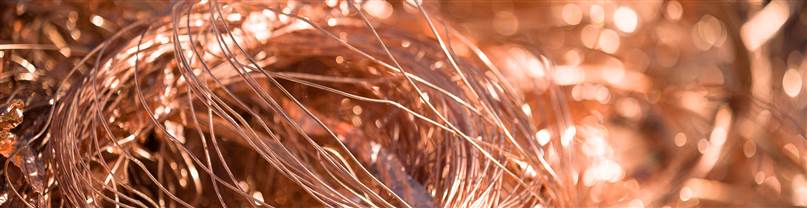
- Copper: preserved conductivity, unlimited recycling.
- Stainless steel: retains its corrosion resistance and appearance.
- Bronze: recyclable without altering mechanical characteristics.
Several challenges can be mentioned:
A technical challenge
We often talk about metal, but there are actually metals. In addition to the different types of metals (steel, copper, aluminium, etc.) within each family, there are many mixtures called alloys. The addition of new compounds to the metal (usually another metal) makes it possible to modify the properties of the initial metal. For example, adding copper to aluminium improves its resistance to stress. This alloy will be used in aeronautics.
Unless it comes from a single source such as aluminium cans, the metal will be recycled by mixing alloys.
One of the major challenges of metal recycling will be to sort metal waste even better by type of alloy so as not to mix all the alloys with each other, extending their life even more.
A geopolitical challenge
The use of recycled metal saves energy: recycled metal is all the more sought after to decarbonize industrial production. The flow of recycled metal is at the heart of the sovereignty issues of all countries. Some countries are reducing, limiting or even banning exports of recycled metals.
The primary metal is manufactured from ores:
- Iron ores for making steel
- Copper ores to make copper
- Bauxite to make aluminium
The extraction of these minerals is generally carried out in open-pit mines, with great impacts on the environment. The extracted ore must then be heated to a high temperature.
Studies show that this primary production consumes a lot of energy and releases large amounts of CO2.
The recycling of metal, called secondary metal, has a much lower impact on the environment. The metal has already been extracted, no need to go looking for the ores. It has already undergone a first thermal cycle. So, it takes much less energy to melt it down again for reuse.
Life cycle assessment studies show energy savings of up to 95% in the case of aluminium.
In short, metal recycling avoids the extraction of metal ores, saves energy and limits CO2 emissions. The environment has everything to gain from metal recycling.