


An integrated approach to water management through desalination
In a region facing significant water stress, the Penglai desalination project secures Wanhua Chemical's water supply while reducing reliance on local freshwater resources. The facility is based on a technical approach that makes use of existing water streams to sustainably reduce abstraction from the natural environment and optimise water resource management. This solution helps relieve pressure on freshwater resources while supporting industrial stakeholders in adopting more water-efficient practices.

China

Desalination

100,000 m³/day

Commissioning 2023
Optimise energy performance and reduce the carbon footprint

Climate pillar

As pressure on water resources continues to increase, the continuity of industrial operations increasingly depends on securing a reliable water supply while controlling costs and minimising environmental impacts. In regions experiencing high water stress, access to a reliable source of high-quality water has become a key factor in industrial resilience.
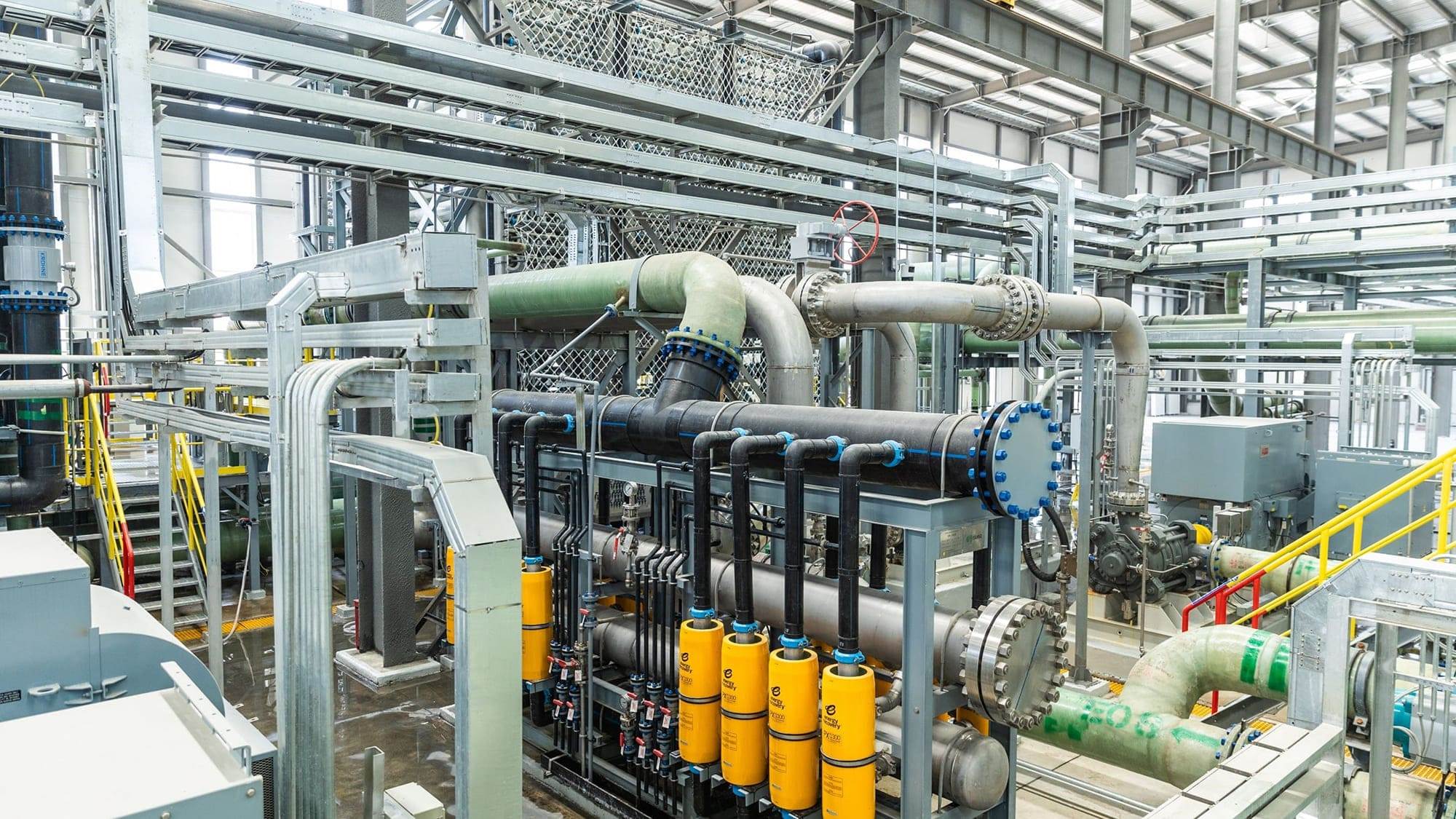
To address this challenge, Wanhua developed a desalination plant based on reverse osmosis technology. The solution produces industrial water while reducing abstraction from local freshwater resources.
The facility also incorporates a circular approach by reusing cooling water discharged from a neighbouring power plant, which is itself supplied with seawater. Combined with advanced RO membrane technology and an intelligent operating system, the use of this existing water stream contributes to operating cost savings of over 15% compared with conventional dual-membrane technologies combining ultrafiltration (UF) and reverse osmosis (RO).
The plant is also designed to cope with significant seasonal fluctuations in seawater temperature, from extremely low temperatures in winter to unusually high temperatures in summer. A pretreatment system combining Densadeg® inclined plate sedimentation and Seaclean™ dual-media filtration provides the robustness and adaptability required to maintain reliable operation under these varying conditions.
Preserve water resources

Nature pillar


In many regions, increasing freshwater scarcity is challenging the balance between economic development, community needs and the preservation of natural ecosystems. Industrial operators located in areas experiencing high water stress must ensure business continuity while reducing pressure on local freshwater resources and limiting the environmental impact of their operations. This requires not only the development of alternative water sources, but also effective management of treatment residuals and discharge quality to protect surrounding ecosystems.
In this context, reducing abstraction from rivers, groundwater and coastal waters is a key priority. The Penglai desalination plant replaces approximately 36 million cubic metres of freshwater with treated seawater. It adopts a circular approach by reusing cooling water from a neighbouring power plant to produce industrial-grade water, thereby reducing the need for additional seawater abstraction.

Secure water supply and strengthen industrial resilience

Social pillar

The project helps secure access to water resources by reducing pressure on freshwater resources allocated to domestic and agricultural uses, while ensuring the water supply required for industrial activities. In doing so, it supports local economic activity and employment.
The project also includes training programmes for local teams to strengthen their technical skills and operational autonomy. These initiatives facilitate knowledge transfer and help ensure the long-term continuity of the service.
