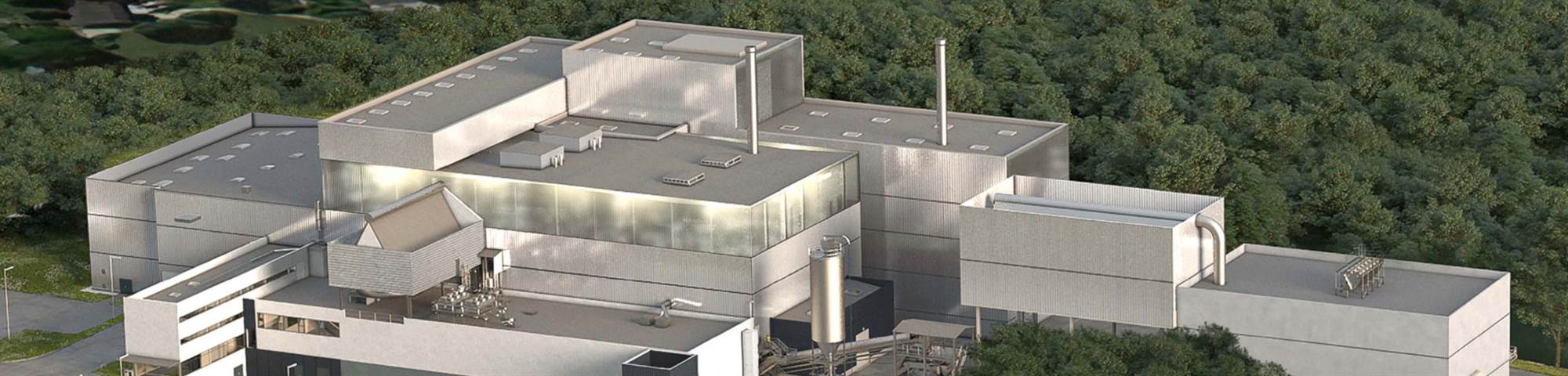


A modernised facility designed to meet local needs
The project delivered by SUEZ for SMPRB illustrates the evolution of Energy-from-Waste facilities towards increasingly efficient infrastructure, optimising resource use and strengthening their contribution to local development. Increased energy production capacity, combined with the expansion of heat recovery for the district heating network, helps enhance local energy resilience while reducing reliance on landfill disposal. The project also contributes to resource preservation through optimised operational practices that reduce water consumption. In addition, it incorporates measures that support local employment and professional integration. This modernisation demonstrates how waste treatment and recovery infrastructure can address several key territorial challenges in a practical and tangible way, including energy security, environmental performance and social development.

France

Energy-from-Waste valorisation

150,000 tonnes/year

Commissioning 2027
Strengthen local energy production

Climate pillar
SMPRB is implementing a territorial project aimed at improving waste management while strengthening both its energy and economic performance. This approach is structured around three main objectives: reinforcing local energy autonomy, supporting the development of district heating networks and improving long-term cost control. The commissioning of a new treatment line will increase the facility’s processing capacity while improving its energy performance.
The commissioning of the new treatment line will increase the facility's processing capacity while improving its energy performance. From June 2027, the plant will supply 24 GWh of heat per year, covering approximately 86% of the heating demand of the Dinan district heating network.
Reduce reliance on landfilling and preserve water resources

Nature pillar
Brittany is already facing increasing pressure on water resources, making water management a growing priority for local communities. Ensuring long-term access to water is a key challenge not only for drinking water supply, but also for agricultural production and industrial activities.
The SMPRB project contributes to this objective by reducing water abstraction and improving water management at the facility. The project delivered by SUEZ is based on three main objectives: reducing the volume of waste sent to landfill, lowering the site's water consumption and supporting biodiversity preservation.
These objectives are reflected in a major industrial transformation program. The modernised facility will have a treatment capacity of 150,000 tonnes per year and will prevent 35,000 tonnes of waste from being landfilled annually.
Water savings are achieved through the replacement of wet flue gas treatment with a dry treatment process. Water requirements for cleaning operations have also been reduced. As a result, groundwater abstraction is expected to decrease by 76%, while the use of water supplied by the public network is expected to fall by 96%.
In addition, biodiversity enhancement measures have been implemented and are highlighted through an educational trail dedicated to local environmental challenges.
Support local development and strengthen social engagement

Social pillar
The facility is part of a broader territorial solidarity approach promoted by SMPRB through concrete actions supporting employment, awareness-raising and engagement with local stakeholders. The project places particular emphasis on professional integration, helping people who are distant from the labour market return to employment. During the design and construction phases, at least 5,000 working hours were dedicated to professional integration through social inclusion clauses.
During the operational phase, the project aims to deliver a total of 61,400 social inclusion hours. This includes awarding the green space maintenance contract to the local social enterprise STEREDENN. In addition, an apprentice is continuously integrated into the site team. Overall, 26 employees are responsible for the day-to-day operation of the facility.
The site also offers educational tools, and guided tours open to a wide audience, helping raise awareness of waste sorting and resource recovery practices.