Accelerating a just ecological transition
by establishing effective operational cooperation between us and an ecosystem of stakeholders committed to the circular economy and access to essential services.
Discover
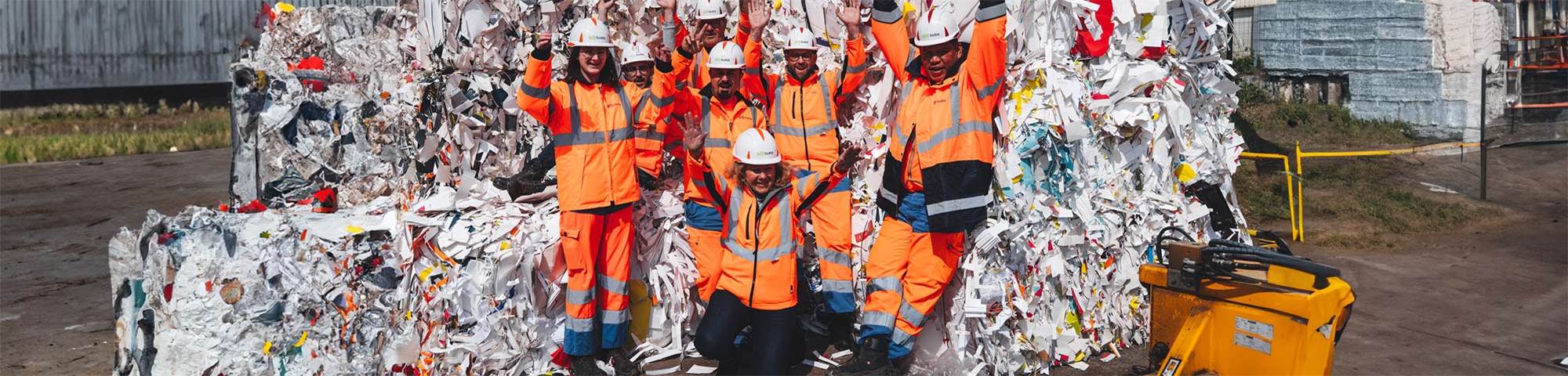
To tackle environmental challenges, innovation is essential, but it cannot be solely technological. At SUEZ, it is technological, social and contractual, and is based above all on a collective dynamic.
Social innovation involves developing and implementing effective solutions to address social or environmental issues through active collaboration between stakeholders from different sectors (businesses, local authorities, and non-profit organisations).
Through inclusive recruitment, partnerships with actors in the social and solidarity economy, and the commitment of our staff, we have developed pioneering expertise in social innovation to enhance its impact and offer circular and inclusive solutions. We also support citizens and customers in the environmental transition, helping them to manage their water consumption and waste production, and by developing innovative, performance-based waste management models designed to reduce waste.
To contribute to the development of the circular economy and ensure our actions are effective, we believe our offerings must be inclusive, form part of a regional cooperation approach, and combine technology with other types of innovation (partnership-based, contractual, social, process-related, etc.).

A successful ecological transition must be inclusive

The circular economy is a collective endeavour

The circular economy is not just about better recycling
We have a role to play in addressing social and environmental challenges. We can use our business lines as levers for impact to offer circular and inclusive solutions aligned with the ecological and solidarity-based transition.


By establishing effective operational cooperation between us and an ecosystem of stakeholders
committed to the circular economy, our approach combines three actions:
Our social innovation team has developed a method and tools to strengthen the social and circular impact of our offerings, always guided by the same principle: mobilising and integrating complementary local stakeholders to better meet our clients’ expectations and go further in terms of the circular economy and inclusion.
We seek to develop long-term, trust-based partnerships, where mutual understanding is a key factor for success.

Our Social Innovation Department operates in regions across the country where the Group faces significant challenges. Our regional teams support the design of circular and inclusive services and then coordinate their operational implementation with social economy partners.
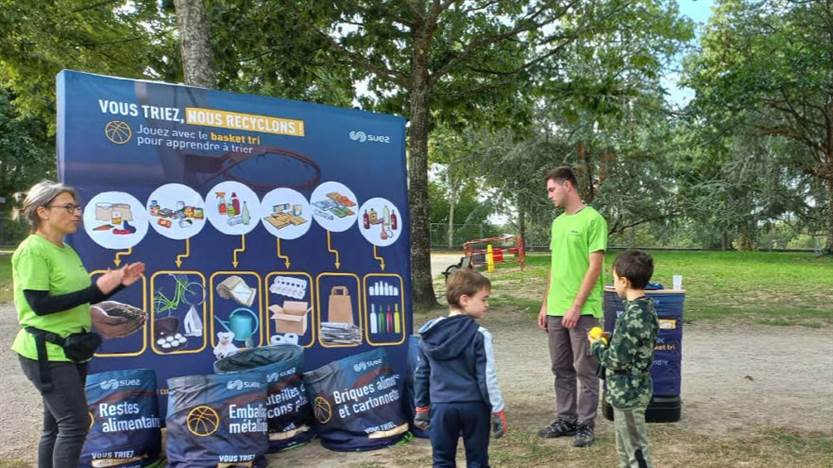
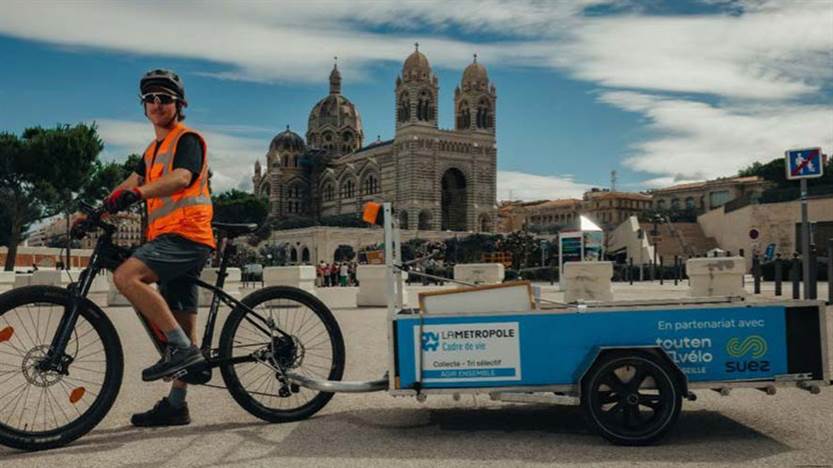
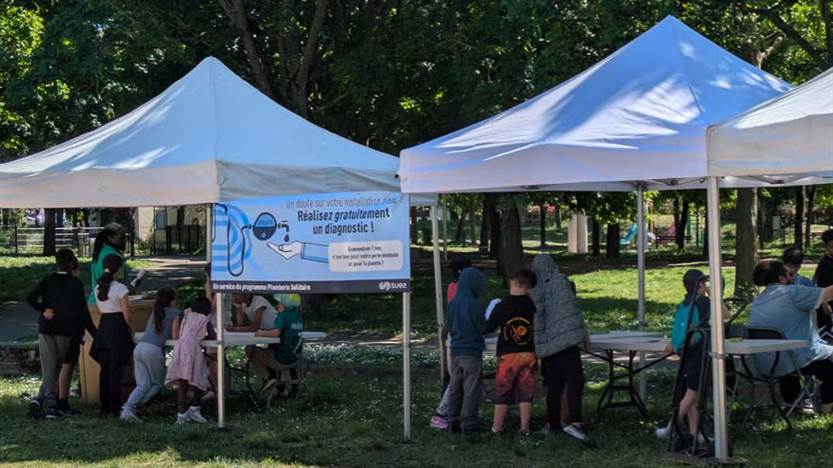
Recognising that developing the circular economy requires support for entrepreneurs in the sector, we have been committed for several years to supporting social entrepreneurs in the circular economy across various regions.
Two general programmes
aimed at accelerating the development of social economy enterprises working towards the circular economy in Auvergne-Rhône-Alpes and Île-de-France:

Les Boucles, run in partnership with Ronalpia and the Lyon Metropolitan Area, has supported the growth of 39 businesses (10 in 2024) over the past three years, including notable successes such as TIZU, Boomerang and Ouicompost.

La Saison Circulaire, an acceleration programme for entrepreneurs in the circular and social economy in the Île-de-France region, run in partnership with PULSE (SOS Group), in which we supported 23 entrepreneurs in 2024: From the bloc, Revisité, Hedj...


The Circular and Sustainable Building Accelerator (ABCD)
Co-developed in 2022 with Les Canaux and Valdelia ahead of the REP PMCB (new regulations aimed at developing the circular economy in the construction sector). Following a successful first season in Nouvelle-Aquitaine, ABCD was launched in the Île-de-France region in September 2024.
28 projects are being supported, including 15 in Île-de-France. With 1,908 tonnes of materials reused or recycled in 2024 and 369 full-time equivalents, the Parisian branch of ABCD is already having a significant social and environmental impact.
We are involved in providing more targeted support to a number of circular economy start-ups through the Transition Programme set up in 2024 by Unitec in Bordeaux, in partnership with other major groups.
Through our recruitment needs, we have a major lever for action in favour of inclusion. Our social innovation team supports our HR teams to encourage the recruitment of people who are distant from the labour market or under-represented in the Group’s business lines. We are therefore rolling out a diverse range of initiatives to reach people who are distant from the labour market: in 2024, 1,758 people distant from the labour market took part in 106 initiatives coordinated by the Social Innovation Department. We are also working to promote inclusive work-study schemes by engaging our network of employment and integration stakeholders and by specifically targeting people from priority neighbourhoods: in 2024, we exceeded our target of integrating 10% of work-study students from priority neighbourhoods in France.
Project Lotus: creating training and recruitment cohorts for shortage occupations
In 2024, we created two cohorts of refugees training as HGV Mechanics and Industrial Maintenance Technicians in waste management, and one cohort of Pipe Fitters in the water sector.
Encouraging our employees’ involvement in local charities
We facilitate our employees’ involvement in local community organisations. Since 2023, we have adopted a “Solidarity Engagement Charter” which enables all our employees in France to commit up to two days (solidarity time credit) or, at the end of their career (through skills-based volunteering for up to one year), to carry out assignments for local charities.
To this end, we have set up a solidarity engagement platform:


