- Providing drinking water that meets health and safety standards
- Improving the attractiveness of the region by increasing consumer satisfaction
Form is loading.
If the form does not load after a few seconds, please reload the page (CTRL + F5 or (or Cmd + Shift + R on Mac).
Producing high-quality drinking water
In order to deliver water that complies with current regulations and according to the quality of your water resources (groundwater, spring, river and even sea) and your challenges (investment, operation, available surface area, expansion, etc.) we design and build water treatment systems dedicated to reducing the physical, chemical and organoleptic parameters (organic matter, turbidity, iron, manganese, sulphates, etc.) responsible in particular for taste and odour, as well as any micropollutants present (chromium, arsenic, PFAS, pesticides, pesticide metabolites, etc.).
To meet the challenges posed by the diversity of micropollutants to be treated and the complexity of the molecules identified in your water resources, we combine contributing processes (ultrafiltration, conventional oxidation, etc.) with dedicated processes:
- adsorption on powdered or granular activated carbon via our Pulsazur®, Carbazur®, Carbazur® Up and Carbazur® Simplex reactors
- advanced retention using nanofiltration membranes/low-pressure reverse osmosis (LPRO) for difficult water with several specific parameters to be corrected (hardness, pesticides, nitrates, micropollutants).
Finally, we guarantee consumer health and safety by eliminating microbiological parameters (viruses, bacteria and parasites) through perfect control of the clarification stage for surface water, as well as through disinfection (chlorination, ozonation, ultrafiltration, UV radiation), the final stage in the process of making water drinkable, regardless of its source.
Towards excellence in the quality of distributed water, reducing limescale
To preserve your underground assets and enable all consumers to enjoy water that is more satisfying to use on a daily basis, we support you in implementing a centralised carbonate removal or collective softening process at your water production plant.
Although not directly harmful to health, excess limescale causes additional costs and inconvenience (discomfort for people with sensitive skin, scaling of equipment and pipes, purchase of cleaning products, excessive energy consumption, etc.). Excess limescale can be treated at drinking water production plants using our dedicated processes that target the ions responsible for water hardness.
Taking into account existing treatments, treatment objectives, the desired level of compactness, reagent costs and local solutions for the recovery of by-products (calcium fertiliser in agriculture, lime substitute in industry, manufacturing material for construction, etc.), we are able to select and implement the solution best suited to your needs.
- Chemical carbonate removal with our Densadeg® Decarbo recirculation reactor or our Softazur® C catalytic reactor
- Physico-chemical carbonate removal by ion exchange
- Physical carbonate removal by Low Pressure Reverse Osmosis (LPRO) or our ERCA² electrocatalytic reactor
SUEZ - Flins-Aubergenville collective decarbonation unit
Credit: SUEZ group
They trust us
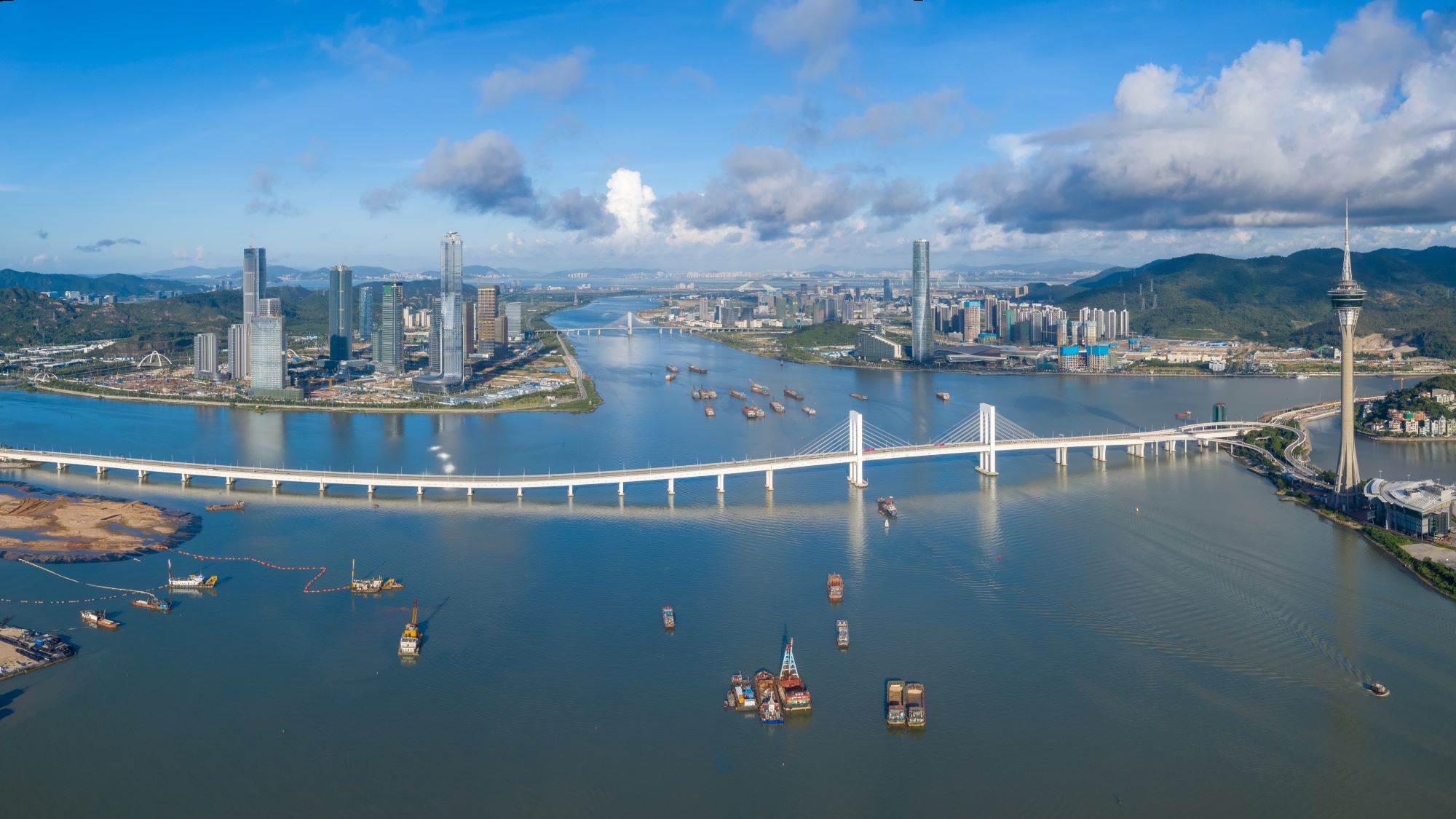
Seac Pai Van drinking water station in Macao: an unwavering commitment to sustainable development

Apremont water treatment: from degraded water to high-quality water
Our other collaborations
Frequently Asked Questions
Water taken from surface water (rivers) first passes through screens and sieves to remove the largest debris. It then undergoes coagulation-flocculation, where particles aggregate into flocs that settle at the bottom of the tanks. The water is then filtered through mineral filters (sand) or membranes to remove any remaining particles. Finally, the water is disinfected to eliminate bacteria and viruses, usually by chlorination, ozonation or UV treatment.
For groundwater (water tables), treatment is simpler but may involve stages of aeration and oxidation, settling, iron and manganese removal, filtration and, in all cases, disinfection.
There are several alternatives for producing drinking water.
- The conventional solution involves collecting surface water (from rivers) or groundwater (from aquifers) and purifying it. For surface water, drinking water production plants use a series of steps: coagulation-flocculation, filtration, adsorption on activated carbon and final disinfection.
- Seawater desalination is a common alternative in arid regions. This method involves removing salt and other minerals from seawater to make it drinkable. The filtration stage is carried out by reverse osmosis, whereby water is pushed at high pressure through a membrane that retains salt and impurities.
In common language, the term ‘hard water’ refers both to the cause (water hardness) and the consequence (limescale deposits) that form under various conditions during domestic water use.
The hardness of water therefore allows us to assess its capacity to form limescale deposits, particularly during domestic use. In common parlance, we refer to water as hard when its hardness is high and to softening (or carbonate removal) when we refer to the treatments used to bring it down to an acceptable level.
Limescale is a solid compound of calcium (Ca²⁺) or magnesium (Mg²⁺) and carbonates (CO₃²⁻).
Carbonate removal aims to reduce water hardness by removing carbonate or calcium ions so that they do not combine to form limescale.
Softening aims to reduce the hardness of water by replacing calcium and magnesium ions (reducing the Ca2+ and Mg2+ content) with other positively charged ions so that they do not combine with carbonate ions.
The terms softening and carbonate removal are often used interchangeably to refer to different hardness treatments.