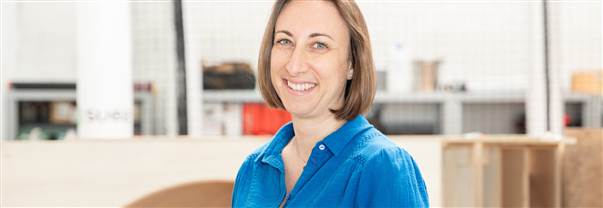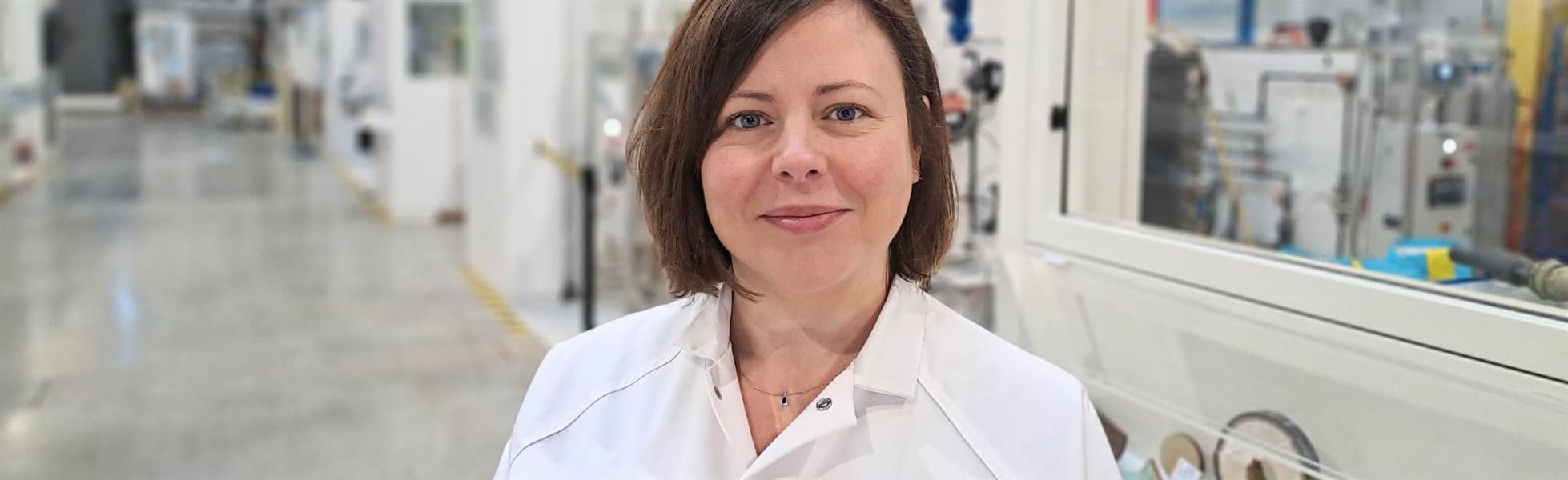

Jennifer is a water pipe investigator and polymer enthusiast who transforms materials science into concrete solutions for preserving the quality of drinking water.
A water pipe is not just any old pipe or a piece of network; there is a whole science behind it.Jennifer
A combination of investigation and materials science
Jennifer was attracted to physics, chemistry and biology from an early age, so it was only natural that she chose a scientific path. She went on to study for a Bachelor's degree in Physics and Chemistry, followed by a Master's degree in Biomaterials at the University of Villetaneuse, in the Paris region, France. She then delved into the world of materials used in the human body, such as prostheses, implants, and dental appliances. It was during this time that she discovered polymers. This marked the beginning of a scientific passion that has never waned: "Polymers have been my guiding thread throughout my studies, my career, and even now."
Jennifer then joined SUEZ to write her thesis on the degradation of water filtration membranes. She immersed herself in a field about which she knew nothing: water treatment, its health implications, and its industrial applications. She immediately found meaning in it. "It was extremely practical. We were working in the field of drinking water... I knew that my research would be put to immediate use."
Jennifer currently leads a team specialising in asset management for drinking water networks. Her work involves combining investigations with materials science to improve network management. "When an operator has a pipe leak, they call us for assistance. They explain what happened," she says. "We carry out thorough diagnostics on the networks in the laboratory to determine the cause of the leaks." Everything is scrutinised, from chemical analysis to assess the condition of the plastic and mechanical tests to diagnose the causes of deterioration. The process is meticulous. "We combine water quality and operational data with physical and chemical analyses of the pipes to determine their condition. We analyse the material from every angle." Thanks to this expertise, Jennifer can determine whether the degradation is chemical or mechanical in origin or whether the leak is due to an external cause. However, her work does not stop at diagnosis.
From the scientific 'crystal ball' to predictive tools
"I torture polymers to push them to their limits and understand their limitations," says Jennifer. At CIRSEE, ageing pilots are used to speed up the ageing process of materials in order to understand the mechanisms involved. This fundamental research then feeds into physicochemical and statistical models that are integrated into digital tools. "It's like a crystal ball," she jokes, before clarifying: "Predictive, so we can anticipate degradation."
These tools enable network managers to identify priority replacements, replacement materials, or operating condition adjustments to slow down degradation. "Materials that last as long as possible mean more robust networks with fewer leaks. This protects the water that is distributed" Jennifer explains. Materials science thus becomes a direct means of preserving water resources and ensuring their sanitary quality.
A passion for materials. Undiminished
Even after fifteen years at SUEZ, Jennifer is still fascinated by the diversity of the materials she studies. For example, a water meter can contain a multitude of polymer parts that interact with each other and with water. "There is never just one material; each combination is unique. The field of plastics is also very dynamic. This platform has existed for 20 years, yet we are still qualifying new materials. I learn something new every day."
Curiosity, perseverance and humility guide her scientific approach. "We live in a world of immediacy, but science takes time. You have to be willing to start again and learn from your mistakes." Teamwork is also essential to her. "Doing science in isolation makes no sense."
Sharing and transmitting science
Jennifer has never held herself back as a woman in this scientific and highly technical field. Even when she was the only girl among twenty students in her first year of her bachelor's degree, she never perceived her gender as an obstacle. 'Don't be afraid, just follow what you want to do. Whether you're a man or a woman, or working in a male-dominated field or not, you shouldn't put up barriers!' At CIRSEE, there is a good gender balance in technical and engineering positions.
What are her ambitions for the coming years? To make all this expertise accessible. "Realising that a water pipe is not just any old pipe or a piece of network; there is a whole science behind it." The aim is to popularise knowledge to better convey it and share it so that operators, technical departments and purchasing departments can fully integrate this scientific dimension into their decisions.