Waste
SIVALOR renews its trust in SUEZ to make its Energy-from-Waste plant a European benchmark in environmental, energy and industrial performance
- On Friday, March 6th, 2026, the Intermunicipal energy-from-waste authority (SIVALOR) once again entrusted SUEZ with the operation of Valserhône’s Energy-from-Waste plant.
- This is a new success for SUEZ, which has been awarded a 10-year contract starting in September 2027.
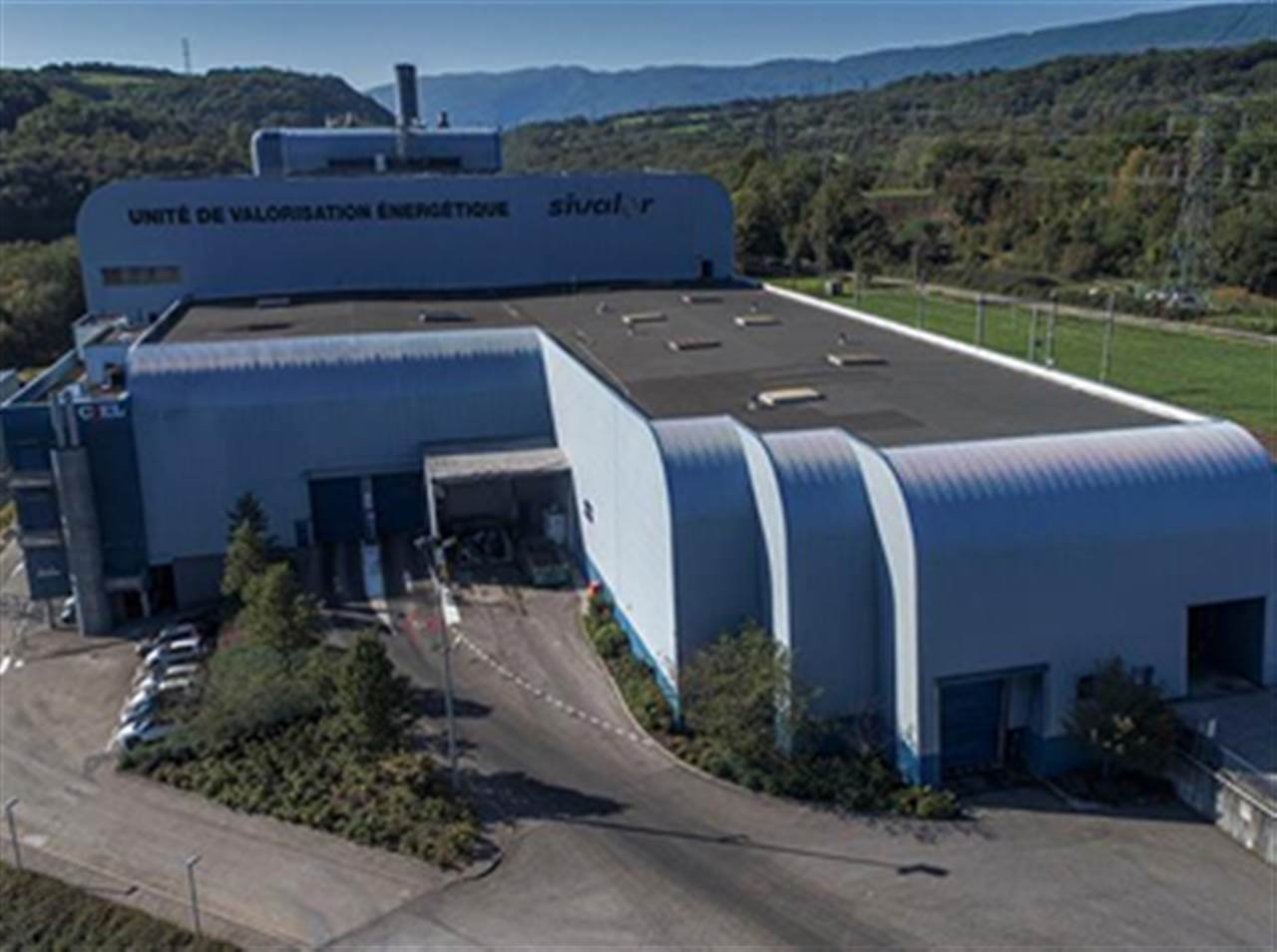
- The Energy-from-Waste plant treats 125,000 tons of household and similar waste per year, which are converted into 70,000 MWh of electricity. It will soon supply over 17,000 MWh annually of heat to a new 12 km heating network deployed in the municipality of Valserhône.
- SUEZ — leader in the French energy recovery market, with a portfolio of 34 plants — and SIVALOR share the ambition of turning this Energy-from-Waste plant into a European benchmark in environmental, energy and industrial performance.
SIVALOR, committed daily to energy recovery from household waste.
SIVALOR brings together three urban communities (Pays de Gex, Haut Bugey and Annemasse Les Voirons), six intermunicipal communities (Terre Valserhône, Genevois, Usses et Rhône, Pays Rochois, Vallée Verte, Arve et Salève), and 146 municipalities in Ain and Haute-Savoie departments. Its mission is to recover energy from household waste across a territory of more than 434,000 inhabitants and to raise public awareness about more responsible waste management.
A partnership designed to make the Valserhône Energy-from-Waste plant a European benchmark.
As part of a 10-year global performance contract, SUEZ is committed, alongside SIVALOR to turn the Energy-from-Waste plant into a true “resource factory” and a European benchmark for environmental, energy, and industrial performance. Several concrete levers will be deployed to achieve this objective.
Increasing energy self-sufficiency
To enhance its energy performance, the site will increase its renewable energy production and reduce the energy consumption of its equipment. The installation of 4,500 m² of photovoltaic panels on the roof of the bottom ash treatment facility will generate up to 885 MWh of additional electricity per year. Solar canopies (54 kWp) and seven charging stations will be installed in the parking area to strengthen energy self-sufficiency. At the same time, the optimisation of Rhône water pumping systems will significantly reduce electricity consumption.
Reducing the environmental footprint
Reusing the site’s rainwater will increase electricity production by 1,250 MWh per year by avoiding its treatment through injection into the furnace.
Water management will become more sustainable and efficient. The site’s rainwater will be reused to produce the demineralised water needed for energy recovery processes. This approach will reduce the site’s drinking water consumption by 75%, saving more than 100,000 m³ over the duration of the contract. Although the facility already operates well below regulatory thresholds, residual emissions will be further controlled through proven technologies and enhanced monitoring, helping to limit the environmental footprint.
Intensifying the recovery of nonferrous metals
The non‑ferrous metal recovery line will be strengthened. The integration of an eddy current separator will improve the recovery of these metals — both in quantity and quality — from the bottom ash. Nearly 300 additional tonnes per year will thus be recovered and reintroduced into recycling channels.
Anticipating warming of the Rhône to ensure availability in both summer and winter
The project includes the installation of energy dissipators on the internal loop of Valserhône’s future district heating network to secure the condensation of the steam produced by the turbine, a process that is currently ensured by a watercooled condenser supplied by the Rhône. This enhanced configuration will guarantee reliable service continuity despite thermal fluctuations in the river and will ensure uninterrupted operation during the summer period.
Protecting teams and preserving industrial assets over the long term
To improve working conditions and limit the deterioration of the facilities, extraction hoods and misting systems will be installed inside the plant. These systems will significantly reduce dust and steam, providing teams with a healthier and more comfortable environment, while helping to preserve industrial assets.
Serge RONZON, President of SIVALOR, said: “We want our energy-from-waste plant to remain an exemplary site serving the local ecological transition, capable of meeting future challenges while ensuring reliable and efficient operation of the site. The approach proposed by SUEZ, focused on climate change adaptation, energy efficiency, optimised recovery of natural resources such as water and the reduction of environmental impact, met our expectations.”
Antoine BOUSSEAU, Managing Director of Services to Local Authorities for SUEZ Recycling and Recovery business in France, said: “We warmly thank SIVALOR for their renewed trust. Drawing on the expertise of our teams — gained from operating 34 similar units in France — we will continue transforming the facility to turn it into a European benchmark in terms of environmental, energy, and industrial performance. Our priority remains to ensure exemplary service continuity, while integrating innovations designed to sustainably improve its performance.”