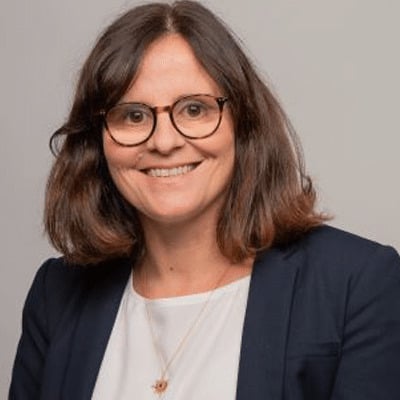
On the occasion of the AI Summit held in Paris on February 10 and 11 - at which AUTODIAG was honored - we caught up with Claire Mathieu, Head of Data and AI at SUEZ, who reports on the use of Artificial Intelligence within the Group. Passionate about technology and convinced that artificial intelligence can play a key role in preserving resources, she explains how SUEZ is innovating to better manage water and waste.
AI is at the heart of SUEZ's innovations for water management. Why is it a priority?
At SUEZ, our innovation and digital solutions teams have been working on optimization algorithms applied to water management for several years. In this field, AI has become an essential tool... Thanks to intelligent sensors and algorithms, we can transform millions of pieces of data into concrete actions. And the results are there: by 2024, we will have saved over 33 million m3 of water, the equivalent of 8,900 Olympic swimming pools! It's a real source of pride to see our technology having such a direct impact.
AI also plays a role in infrastructure optimization. In concrete terms, what are the benefits?
One of the biggest challenges for local authorities is to modernize aging infrastructures. Water distribution and wastewater treatment networks are often obsolete, putting a strain on budgets and available resources. Delaying their renewal can lead to much higher maintenance costs, not to mention the risks to water quality and continuity of service.
This is where AI comes into play to intelligently prioritize interventions. By analyzing historical data on breakdowns, the age of infrastructure or the materials used, AI can predict potential degradation and help plan renewal work proactively.
Industrial processes are increasingly using intelligence technologies to improve their performance. In water treatment, whether for wastewater or drinking water, energy consumption and the quantity of product used are often major cost items. Optimizing these processes is therefore essential to both reduce costs and limit environmental impact. AI makes it possible to monitor critical parameters (temperature, pH, contaminants, etc.) and suggest adjustments to operators, thus improving the efficiency of operations while complying with environmental standards.
It's a real leverage point for reducing our environmental footprint and saving money. We're talking about investment cost reductions of up to 30%. It's a revolution for local authorities and manufacturers alike!
AI is also transforming waste management. How is this playing out in the field?
You'd be surprised how AI can change the game when it comes to waste recovery... Previously, only the volumes collected were measured. Today, thanks to waste characterization solutions developed in collaboration between our Innovation, Digital Solutions and Recycling & Recovery teams, we are able to identify waste flows.
To do this, we have developed artificial intelligence solutions to detect recoverable waste at the various stages of collection and processing: in collection trucks, to map sorting quality on a territorial scale; in sorting centers, thanks to an arch equipped with a camera placed directly on the sorting line, combined with algorithms. In waste-to-energy plants (UVE), to identify recyclable materials that should have been sorted beforehand, and undesirable waste that could damage the facilities, when the waste is dumped into the pit.
A concrete example that won the “AI for Efficiency” call for projects at the AI Summit 2025 in Paris is Autodiag, our camera equipped with an artificial intelligence algorithm continuously analyzes waste flows, automatically identifying and counting objects. This solution enables operators to improve stream purity in real time and optimize the recovery of recyclable waste.
Looking ahead, what are the next steps in AI at SUEZ?
We're at an exciting turning point. In addition to the uses of AI mentioned above, generative AI is also going to take us even further, and we fully intend to exploit it for the Group's various businesses. This will transform the way we work, and we want to support this transition with appropriate training and an AI ethics charter. Our ambition is clear: to continue to innovate, to develop intelligent solutions to preserve the environment, and to prove that economic performance and ecological performance can go hand in hand.
Claire Mathieu: a data expert with a wealth of experience
Born in Marseille into a family of mathematics enthusiasts, Claire Mathieu studied science in preparatory classes before entering a telecommunications engineering school. After a landmark internship in a medical image processing research laboratory at Yale in the USA, she began her career in the telecoms sector.
She joined a leading identity technology company, where she worked on sensitive national security projects. It was here that she discovered the world of Big Data. Later, she joined Actility, a French startup specializing in the Internet of Things (IoT), leading her to work on a variety of projects ranging from fire prevention in Australia to anti-poaching in South Africa.
In 2019, she joins SUEZ to structure and develop the uses of data and artificial intelligence within the Group, putting her expertise at the service of water and waste management.