Public sector
[en] : À retenir
  • Data analysis to protect your networks over time
  • Optimising water systems to reduce losses
  • Monitoring indicators to identify emerging trends and improve the performance of your networks

Real-time network monitoring

To ensure the long-term sustainability of a water network, accurate monitoring and management of facilities are vital. Collecting and analyzing real-time data makes it possible to monitor essential operating parameters of a network and anticipate service failures, helping to preserve water resources in communities and deliver the best service to users.

Optimizing water resource management requires precise monitoring and management of hydraulic networks. These infrastructures are essential to our daily lives and require constant attention.


Network monitoring, carried out by our teams, relies on several key elements:

  • Real-time data collection: Smart sensors strategically deployed across the network continuously monitor pressure, flow, water quality and potential leaks.
  • Smart metering: Automated meter readings provide essential consumption data in real time and enable anomaly detection.
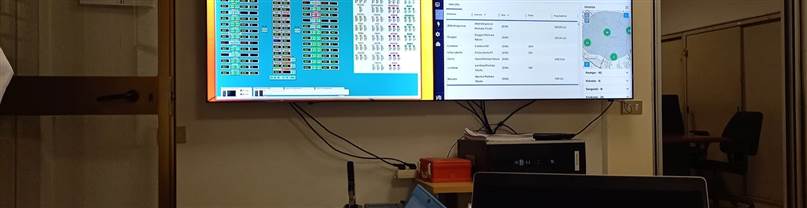
  • Advanced management tools: With powerful solutions such as Aquadvanced water networks, millions of data points are analyzed using algorithms that anticipate potential problems and trigger preventive actions.
  • Optimised sector design: Hydraulic sectorisation helps track volumes of water distributed and consumed and detect leaks more effectively.


By designing networks that are more efficient and better adapted to community needs, it is possible to reduce water losses and improve overall water service performance.


Monitoring and managing water networks are key to ensuring efficient and sustainable management of this precious resource. By combining the latest monitoring technologies, data analytics and modeling, we help preserve community assets and guarantee safe, reliable and environmentally responsible water supply for future generations.

Cutting-edge techniques to better understand water networks and reduce aging

To ensure optimal operational efficiency in water network management, it is essential to implement adapted tools and processes. A first crucial step is to break down losses by category and by zone.

By precisely identifying the sources of losses—whether caused by leaks, theft or other factors—we can effectively target efforts to reduce them.


Automatic calculation of performance indicators is another key element in monitoring a water network. With accurate, up-to-date data on key indicators such as hydraulic efficiency rates, water loss rates and failure frequency, operators can make informed decisions to improve the performance of community networks.


Monthly monitoring of macro-indicators enables anticipation of performance trends over time and early identification of emerging issues.


By regularly analysing this data, we can adjust strategies in real time to reduce leakage rates and optimise network efficiency.

Proactive management of water networks

Network management also requires proactive handling of technical resources. 

This includes planning maintenance and repair interventions, regulating flows according to consumption and seasonal variations, and implementing distribution optimisation strategies.


Hydraulic modeling tools are used to simulate different scenarios and identify the best solutions to ensure sustainable network management.

Our other solutions to improve network performance

Public sector

Aquadvanced water networks

Reduce losses, improve water quality and detect leaks in real time. Optimise the management of your drinking water networks with Aquadvanced water networks
Public sector

Non-Revenue Water (NRW)

Discover our tools and action plans to reduce Non-Revenue Water. Achieve sustainability with our solutions today.