To cope with this depletion, the priority is to consume with sobriety and to preserve quality freshwater resources. Efforts to reduce energy consumption can be made by all users to control their consumption, whether domestic, public, industrial, agricultural, etc. Resource management is also a multi-stakeholder approach, which requires instrumentation and management to avoid, even in the event of a shortage, lasting imbalance of ecosystems and freshwater resources, whether in quantity or quality.
These efforts at sobriety and good management are not always sufficient to avoid shortages and conflicts of use. It then becomes necessary to mobilise non-conventional fresh water or seawater, which constitute new substitute resources.
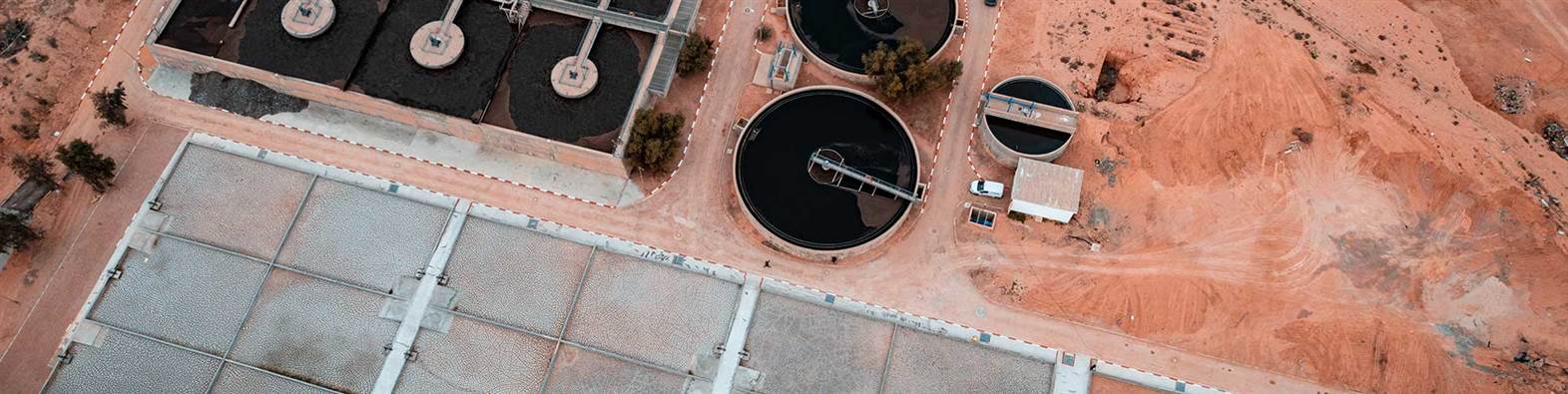
We reuse treated wastewater from municipal or industrial wastewater treatment plants through the development of complementary treatments adapted to the intended uses. Firstly, to preserve traditional water resources, we replace them with treated wastewater for uses that do not require the quality of drinking water: for example, for watering green spaces, for irrigation in agriculture, for washing roads or equipment, etc.
The mobilisation of non-conventional fresh water generally requires the implementation of dedicated structures involving more advanced treatment processes and dedicated networks.
Finally, we also produce drinking water by desalinating seawater. Arid countries such as those of the Persian Gulf or Australia have massively adopted desalination. Spain and Italy are also building many desalination plants, using seawater or brackish water. For desalination, we have been using reverse osmosis technologies for several decades. Our developments and research programs make it possible to limit energy consumption, to associate desalination plants with the production of renewable energy, and to control the impact of discharges into the sea, and to recycle part of these discharges. Desalination therefore offers a controlled and robust alternative for producing drinking water, which can thus be conveyed by existing drinking water supply and distribution infrastructures (reservoirs, networks, etc.), or fresh water for industry.