To remember
- Restore water quality fast
- Measurable Results
- Safe, Sustainable, and Adaptable
Fast, non chemical pipe cleaning for drinking water networks
Ice Pigging is a no dig pipe cleaning service that uses a pumped ice slurry to form a semisolid pig which scrapes and entrains sediment and biofilm while flowing through the pipe. The method restores water clarity, reduces turbidity events, and avoids chemical cleaners or invasive works.
Deployed from standard hydrants and mobile tankers, Ice Pigging adapts to a wide range of pipe diameters and configurations without network modification. The ice pig dislodges particulate build‑up and biofilms then transports solids to a controlled extraction point, delivering a physical clean rather than a simple flush. For North American utilities managing aging infrastructure or responding to discoloration complaints, this approach offers rapid restoration of potable water quality with minimal customer disruption and low operational risk.
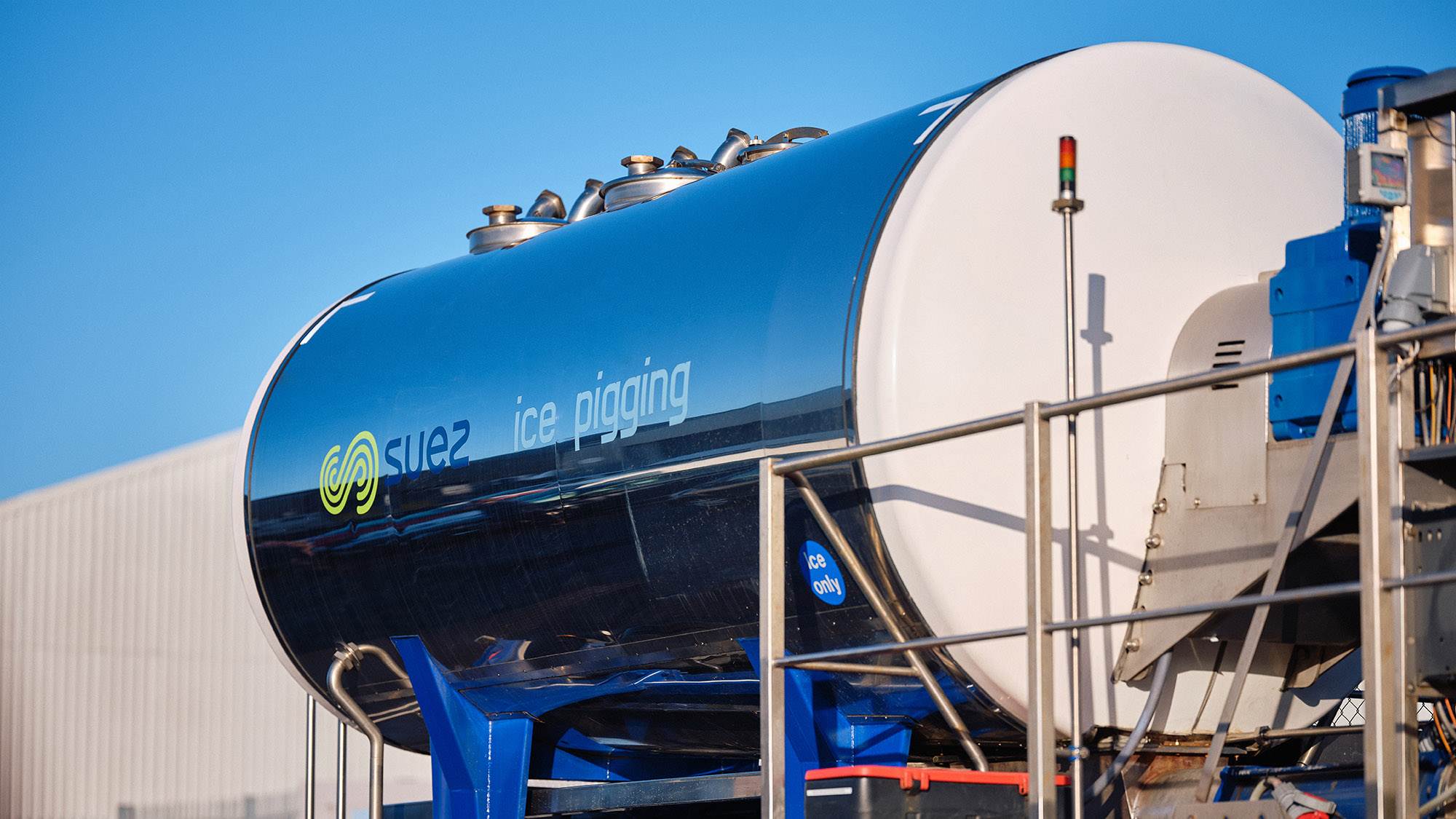
Ice pigging - SUEZ
Credit: SUEZ group
Why utilities choose Ice Pigging for mains maintenance
Utilities prefer Ice Pigging for its speed, effectiveness, and low risk profile. It cleans long trunk mains and short distribution pipes efficiently, requires little downtime, and eliminates the need for chemical or abrasive cleaning methods while producing quantifiable results.
Ice Pigging’s controlled, measurable cleaning enables utilities to prioritize problem areas, reduce repeat complaints, and limit the frequency of costly reactive interventions. The technique minimizes turbidity spikes and protects downstream treatment and meter assets. Its adaptability supports planned maintenance, post repair flushing, and targeted responses after flow reversals or storm events, making it an attractive, cost-effective tool in North American asset management strategies
How the Ice Pigging process works operationally
Ice slurry is produced or transported on site, pumped into the mains via hydrants, and driven through the system to collect sediment. The pig is then extracted, melted, and the removed solids are quantified, providing a verifiable cleanliness metric for utility records.
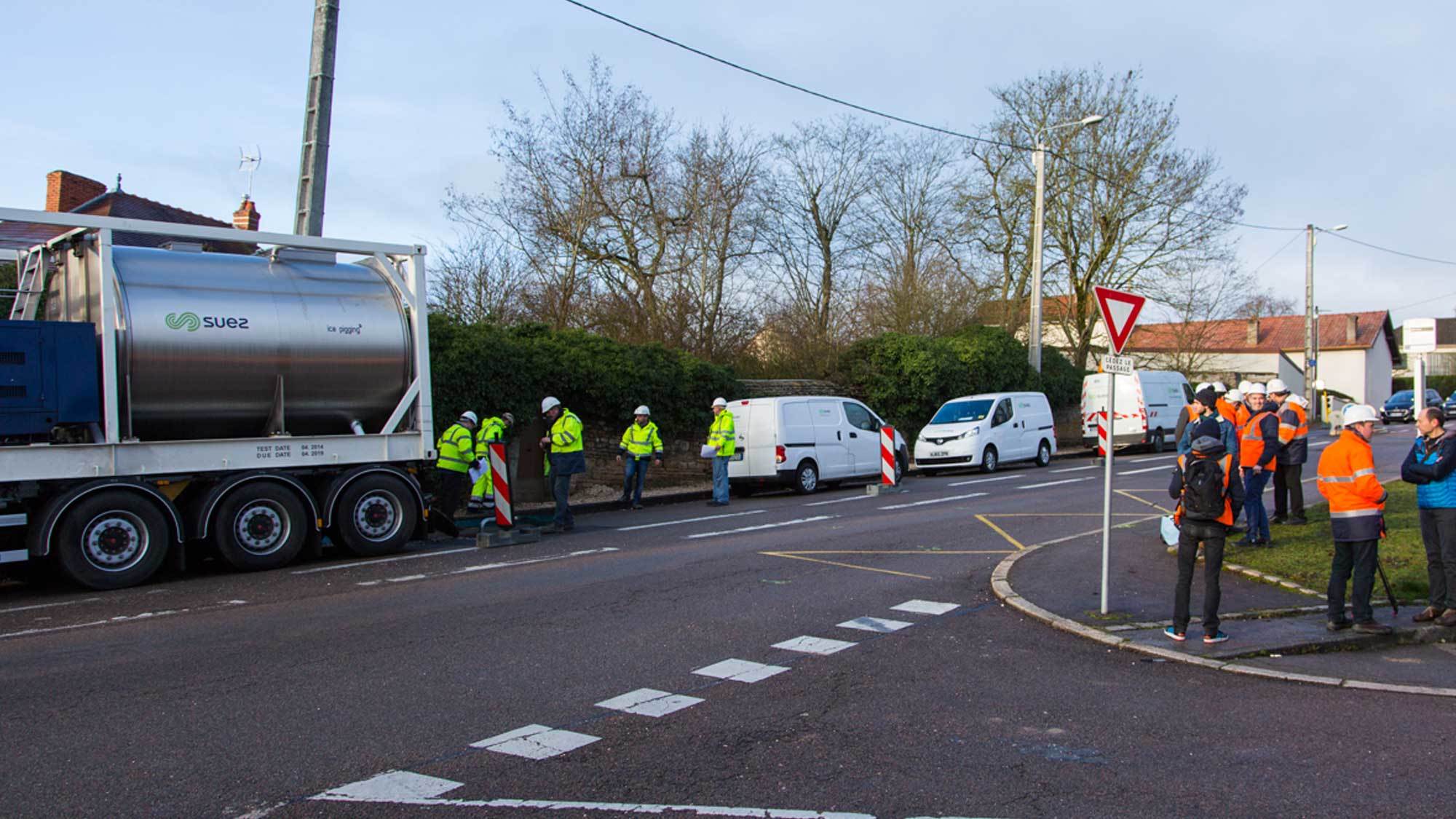
Operational teams stage mobile tankers or local ice production units to create a thick, pumpable slurry. Standard hydrants serve as insertion and extraction points, so no excavations or pipe modifications are needed. The ice pig navigates fittings and bends, mechanically scouring pipe walls while entraining deposits. Post cleaning, solids are separated and sampled to document effectiveness, supporting regulatory reporting and helping utilities demonstrate value from maintenance programs.
Ice Pigging: How does it work? - SUEZ
Credit: SUEZ UK
Applications across network types and scenarios
Ice Pigging is suited to potable distribution networks, trunk mains, service reservoirs, and industrial water systems. It is especially useful after bursts, flow reversals, valve operations, or when customers report discolored water.
From aging cast iron mains to large diameter trunk lines, Ice Pigging scales to many asset classes and operational contexts. It complements routine cleansing, supports emergency response after contamination or construction, and serves as a preparatory step before lining or rehabilitation works. For industrial sites, the technique can remove process residues where chemical cleaning is undesirable.
Environmental, safety, and regulatory advantages
The method is nontoxic and avoids chemical additives; if a pig becomes lodged it simply melts. Ice Pigging reduces environmental risk, keeps hydrants and meters intact, and aligns with policies favoring nature-friendly maintenance practices.
Ice slurry is composed of water only, eliminating disposal concerns tied to chemical cleaners. The low abrasion nature of the ice minimizes damage to older pipe walls and meter assemblies. Because the process uses existing hydrants and confined operations, it limits traffic disruption and lowers field safety exposure. These attributes help utilities meet environmental and public health expectations while maintaining operational efficiency.
Measuring success and building a cleaning program
Success metrics include volumes of solids removed, before/after turbidity and color data, complaint reduction, and lifecycle cost savings. These metrics support evidence‑based prioritization of mains cleaning and rehabilitation planning.
Utilities track cleaning effectiveness through laboratory analysis of extracted material and pre/post water quality monitoring. Quantified results inform ROI calculations, help justify repeat cleans, and guide capital works by identifying lines with recurrent deposit issues. Incorporating Ice Pigging into preventive maintenance reduces emergency repairs and supports long-term service reliability for North American communities.
They trust us
Ice Pigging: No-dig solution for pipe cleaning
We offer Ice Pigging service, where tankers of ice slurry are transported to a customers’ site to undertake one-off or periodic cleaning. This low-risk, no-dig process can be applied to a wide range of pipe systems in diverse industrial, water and wastewater applications.



Frequently Asked Questions
Ice Pigging is effective across a wide range of asset classes, from small distribution pipes to large trunk mains, and adapts to varied materials (cast iron, ductile iron, PVC, HDPE) and diameters using tailored hydrant-based insertion and slurry volumes.
Compared with standard water flushing, Ice Pigging removes far more settled solids and biofilm with less water use and shorter downtime. Versus mechanical/solid pigging, it is no-dig, low-risk, and navigates bends and valves while minimizing risk to meters and fittings. Ecologically, Ice Pigging uses only water, no chemicals, so there are no disposal concerns or environmental permits tied to cleaning agents. The reduced water consumption compared to conventional flushing conserves resources and lowers the volume of wastewater requiring treatment.
Yes. The ice pig is low abrasion and nonchemical, protecting pipe linings, joints, and domestic meters; if lodged, the ice simply melts. Standard safety plans and traffic management ensure low operational risk during hydrant-based deployments.
Mobile tankers or onsite ice production feed a hydrant insertion; the ice pig is pumped through to a controlled extraction point. Turn around is rapid, cleaning is typically completed in hours to days depending on reach, minimizing customer disruption and reducing service outages.