Local authorities Companies
To remember
  • Transform wastewater into safe, reliable alternative water resources 
  • Recover nutrients and reclaim high‑quality water through advanced treatment
  • Strengthen water resilience with circular, sustainable reuse solutions

300

gallons

per day is the average household usage in North America

67%

of treated wastewater is reused in North America

57

Million
people we serve with clean water around the world

Turn wastewater and raw water into safe, reliable alternative resources

We support you in rethinking water as a valuable resource that can be recovered, reused, recycled, and protected. By combining advanced filtration, nutrient recovery and high-quality purification, we help you produce treated water that is safe, reliable and adapted to a wide range of reuse and drinking water applications.
Unlocking alternative water sources starts with making the most of existing ones. With Oxyblue, we help you produce high-quality reclaimed water from wastewater through advanced biological treatment and membrane filtration. By removing suspended solids, pathogens and micropollutants, you can safely reuse water for industrial processes, irrigation, municipal applications, urban uses or environmental restoration, reducing dependence on freshwater supply and supporting more sustainable water treatment practices.

Water reuse becomes even more sustainable when valuable resources are recovered along the way. That’s where Carbablue plays a key role. By capturing nutrients such as nitrogen and phosphorus from wastewater, we help you turn treatment by-products into useful, recycled resources. This circular approach strengthens municipal and industrial treatment plant operations, improves overall treatment performance, and opens new reuse opportunities while lowering environmental impact and operating costs.

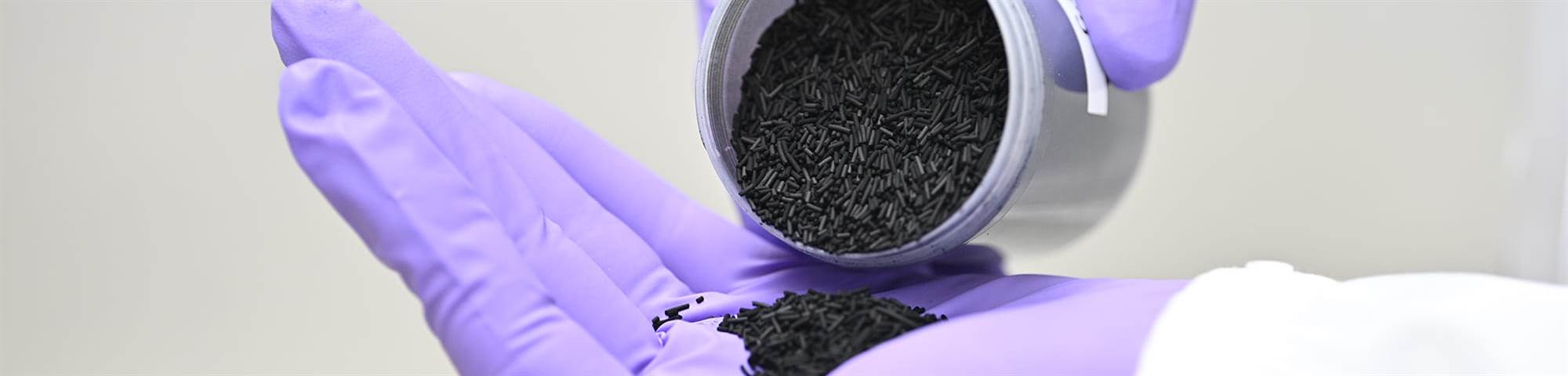
Ensuring water quality remains essential, whether water is reused, reclaimed, or supplied as potable drinking water. With Carbazur, we reinforce advanced filtration by removing natural organic matter, micropollutants, and taste and odor compounds. This high-performance granular activated carbon solution improves the robustness of treatment processes, protects downstream disinfection, and helps you consistently meet strict regulatory standards across states and municipal systems in North America.

Together, Oxyblue, Carbablue and Carbazur form a complementary approach to water reuse, reclaimed water production, and alternative water supply. From producing treated and reclaimed water, to recovering valuable nutrients, to polishing water for high-quality or potable uses, each solution supports safer reuse, stronger environmental protection, and more resilient water systems for municipal and industrial clients.

As your partner, we help you secure water resources, protect public health and adapt to climate challenges. By transforming wastewater and raw water into valuable, reused and recycled resources, we enable you to build sustainable, circular and future-ready water solutions for communities, industries and treatment plants alike.

Why reuse treated wastewater?

Water recycling is essential for conserving natural water resources, reducing reliance on drinking‑quality water, and supporting communities and industries during periods of scarcity through sustainable water reuse.
Water recycling plays a critical role in preserving water resources by reserving high‑quality drinking water for essential uses and supporting the continuity of economic activities during periods of water restrictions. 

Through water reuse, wastewater is given a second life. Instead of following a linear path, use, treatment, and discharge into the environment, we shift to a circular water management model where treated water becomes a valuable resource for new applications. This circular approach helps protect natural water resources by reducing extraction and promoting sustainable water use.

Water recycling also allows the quality of treated water to be matched to its intended purpose. Today, universal access to potable water often results in drinking‑quality water being used for tasks that do not require it, such as agricultural irrigation, landscape watering, and industrial cleaning.

By implementing alternative water networks designed for non‑potable uses, communities and industries can reduce unnecessary demand on drinking water supplies while maintaining strict health and safety standards for operators and the public. In some regions, advanced water recycling technologies can even produce potable water when needed.

In addition, water recycling helps sustain economic activities during droughts or periods of water scarcity. Many industries and recreational facilities, such as manufacturing plants, sports fields, racecourses, and golf courses, depend heavily on reliable water availability. By providing a non‑conventional water resource, water recycling enables these sectors to continue operating responsibly and efficiently, even under severe pressure on traditional water supplies.

How to reuse treated wastewater?

The goal of water recycling is to deliver a sustainable, purpose‑driven water supply that meets a clearly identified need. Every water reuse project must comply with strict environmental, regulatory, and contractual requirements to ensure safe and responsible implementation.
For projects involving the reuse of treated wastewater, our teams provide the full range of expertise needed to design, develop, monitor, and operate advanced water recycling systems and facilities.

A treated wastewater reuse project is far more than a technical challenge. It involves social acceptance of wastewater reuse, administrative approvals and permitting, environmental impact assessments, and the integration of reliable water treatment technologies. Each of these elements is essential to building a safe, compliant, and sustainable solution.

Our specialized teams are equipped to support you through every phase of your water recycling project, from initial feasibility studies to long‑term operational management, ensuring full compliance and optimal performance.

What techniques are used to reuse treated wastewater?

Treated wastewater reuse projects differ based on their intended applications, requiring advanced water treatment technologies to guarantee safety, reliability, and operational efficiency. Each reuse project must be designed with the appropriate level of treatment to meet environmental and regulatory standards.
The level of treatment applied to reused treated wastewater varies depending on its final use. Some applications require basic treatment, while others, especially those related to potable water production, demand more extensive and sophisticated processes.

Common water recycling technologies include:
  • Filtration systems such as sand filtration, disc filtration, and membrane filtration (including ultrafiltration and reverse osmosis)
  • Disinfection processes such as chlorination, ultraviolet (UV) radiation, and ozonation


For more advanced applications, particularly those intended for drinking water production, additional treatment steps are required, such as:

  • Activated carbon adsorption, ozonation, or reverse osmosis to remove micropollutants
  • Nanofiltration, reverse osmosis, or electrodialysis to reduce salinity and specific dissolved minerals


With extensive global experience, our teams have the expertise and proven references needed to support all types of treated wastewater reuse projects, from design and development to implementation and long‑term operation.

They trust us

Supply reliable drinking water to 85% of Sydney's population

 The Prospect Water Filtration Plant is one of the world’s largest water filtration plants, supplying reliable drinking water to 85% of Sydney’s population.


 Operated by our team in the Greater Western Sydney region, the Prospect Plant operates 24/7, has a design capacity to treat up to three billion litres/792 millions gallons of water per day, and uses innovative water filtration techniques to purify Sydney’s water. 
 
Since its opening on the 4 November 1996, the plant has been providing consistently safe and reliable drinking water that complies with the National Health and Medical Research Council’s Guidelines for Australian Drinking Water.   

Frequently Asked Questions

Our other solutions to discover new water resources

Local authorities
Companies

Groundwater Resources Management

Discover smart solutions for sustainable groundwater management. Explore how to optimize resources and ensure safe access to water!