- Dual-action filtration + adsorption
- Flexible configurations
- Proven, scalable platform
Advanced Purification for Drinking Water and Wastewater Treatment
Our advanced purification platform combines high‑performance media, optimized hydraulics, and flexible reactor configurations to address the evolving challenges faced by municipal and industrial utilities. Whether treating drinking water or wastewater, the technology provides reliable removal of solids, organic matter, taste‑ and odor‑causing compounds, and emerging contaminants.
The system supports both downflow filtration and upflow adsorption designs, allowing operators to tailor performance to specific treatment goals. Downflow configurations deliver robust filtration and adsorption in a single step, improving effluent clarity and consistency. Upflow adsorption reactors enhance contact time and media efficiency, making them ideal for targeting trace organics, natural organic matter (NOM), pesticides, and other micropollutants.
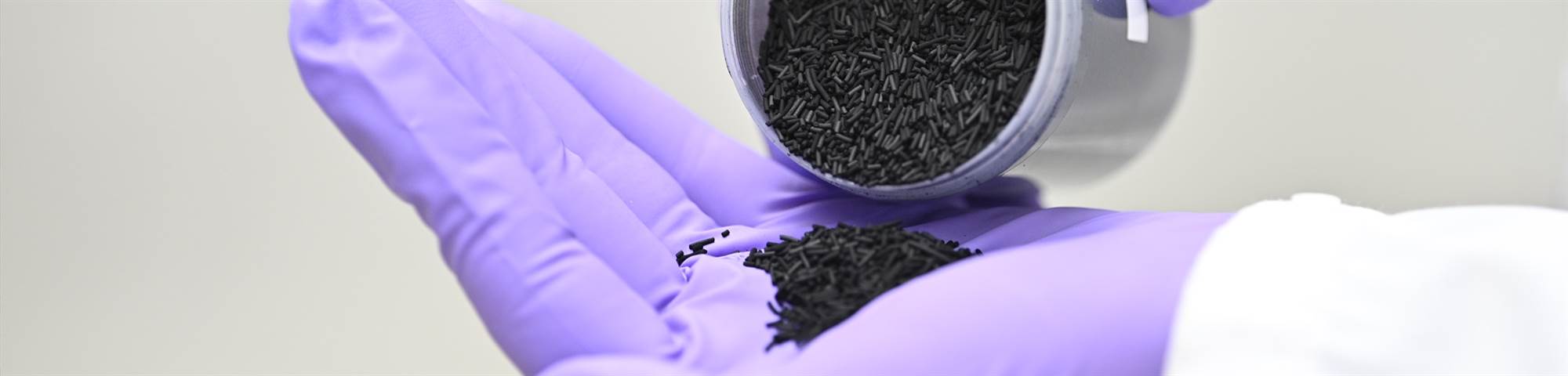
A thick, homogeneous granular activated carbon (GAC) layer captures fine particulates while adsorbing dissolved contaminants. The extended bed depth and controlled water head (1.20 meters/ 4 feet) help maintain optimal contact time and prevent degasification, ensuring stable performance in both clarified drinking water polishing and advanced wastewater treatment.
For applications requiring continuous adsorption capacity, the upflow configuration supports regenerable GAC operation. Spent carbon is withdrawn from the top and replaced with fresh media at the bottom, maintaining consistent treatment efficiency without generating sludge in drinking water applications.
Together, these purification technologies, delivered through the Carbazur® system for drinking water and the Carbablue® system for wastewater, offer a scalable, versatile platform that improves water quality, strengthens environmental protection, and helps utilities meet current and future regulatory requirements with confidence.
High‑Efficiency Carbon Filtration and Adsorption Technology
Our filtration and adsorption technology provides a compact, multi‑stage treatment solution designed to improve water quality across both drinking water and wastewater systems. As water flows downward through the filter bed, suspended solids and fine particulates are captured, while the GAC adsorption layer removes dissolved organics, odors, chlorine by‑products, and a wide range of contaminants.
This combined filtration–adsorption approach strengthens effluent polishing, improves clarity, and reduces pollutant loads prior to discharge or reuse. In drinking water applications, it enhances aesthetics by reducing taste and odor compounds and lowering precursors to disinfection by‑products. In wastewater applications, it supports consistent effluent quality and helps utilities meet tightening discharge limits.
The modular design integrates easily into existing treatment trains, and automated backwashing maintains stable performance and long media life. With a proven hydraulic configuration and high‑efficiency GAC media, the system offers a reliable, cost‑effective solution for utilities seeking to improve water quality, strengthen regulatory compliance, and add an additional layer of protection to their treatment processes.
This technology is deployed in two product configurations: Carbazur® for drinking water treatment and Carbablue® for wastewater treatment. Both leverage the same downflow filtration and adsorption principles to deliver dependable, high‑performance results.
Advanced Micropollutants and PFAS Removal Technologies
Our advanced carbon adsorption platform is engineered to remove the most challenging contaminants found in both drinking water and wastewater. Using optimized hydraulic designs and high‑efficiency granular activated carbon (GAC), the system captures dissolved organics, trace chemicals, PFAS, pharmaceuticals, pesticides, and other emerging contaminants with exceptional accuracy.
Two hydraulic configurations support different treatment goals. The downflow design provides simultaneous filtration and adsorption, capturing suspended solids while removing dissolved contaminants and reducing pollutant loads prior to discharge or reuse. This approach improves clarity, enhances effluent consistency, and integrates easily into existing treatment lines with automated backwashing to maintain stable performance and long media life.
The upflow adsorption configuration maximizes contact time and media utilization by distributing water uniformly from the bottom of the reactor upward. This minimizes channeling, reduces pressure loss, and extends media life while ensuring consistent removal of micropollutants under variable flow conditions. The upward flow pattern is particularly effective for utilities targeting PFAS, trace organics, and other contaminants that require longer adsorption contact times.
Together, these technologies deliver high‑value polishing performance that strengthens regulatory compliance, enhances public health and environmental protection, and supports long‑term water quality goals. They are deployed in two product configurations: Carbazur® for drinking water treatment and Carbablue® for wastewater treatment.
References
PFAS treatment at Ternay: a first in France with Rhône-Sud authority
Our patented technology is being used for the first time in France to tackle the issue of “forever chemicals”. It will ensure water quality for more than 170,000 users in the Southern Lyon area supplied by the Ternay plant.
Frequently Asked Questions
Granular Activated Carbon (GAC) is highly effective at removing a wide range of contaminants from both drinking water and wastewater, making it one of the most versatile and widely used treatment technologies. GAC filtration and adsorption target:
- PFAS (per‑ and polyfluoroalkyl substances)
- Natural organic matter (NOM)
- Taste and odor compounds
- Chlorine and chloramine by‑products
- Volatile organic compounds (VOCs)
- Synthetic organic chemicals (SOCs)
- Pesticides and herbicides
- Pharmaceuticals and personal care products (PPCPs)
- Industrial chemicals and solvents
- Dissolved organics and trace contaminants
- Color‑causing compounds
- Residual disinfectants
In both municipal drinking water treatment and advanced wastewater treatment, GAC provides powerful adsorption, polishing, and micropollutants removal, helping utilities improve water quality, meet tightening regulations, and protect public health and the environment.
Granular Activated Carbon (GAC) is a highly porous filtration and adsorption media used in both drinking‑water treatment and wastewater treatment to remove a wide range of contaminants. Made from carbon‑rich materials processed to create an extensive internal surface area, GAC captures dissolved pollutants through adsorption, making it one of the most effective technologies for advanced water purification.
By reducing contaminants, GAC filtration enhances water clarity, improves taste and odor, lowers disinfection by‑product precursors, and supports compliance with increasingly strict drinking‑water regulations. It’s a proven, reliable technology widely used by municipal utilities and industrial facilities to deliver cleaner, safer, better‑tasting water.